Lift brakes

Hoisting brakes are a critical safety component of the lifting drives used in cranes and hoists. They securely hold the load in position, provide controlled stopping during lowering operations, and minimize the risk of unintended load movement in the event of a drive failure, power loss, or other emergency conditions. A properly engineered braking system protects the operator, the handled load, and the crane itself.

Structurally, hoisting brakes are most commonly electrohydraulically released spring-applied brakes acting directly on the motor or gearbox shaft. Their design is based on the rated load, operating duty, number of operating cycles, acceleration and braking characteristics, and the required stopping distance. A properly selected hoisting brake helps minimize shock loads within the drive system, reduces stress on mechanical components, and contributes to the long-term reliability of the crane.

Brakes with automatic wear compensation are used in applications where a consistent braking torque is required throughout the service life of the brake linings without the need for frequent manual adjustment. Their design continuously compensates for the wear of the friction material, ensuring repeatable braking performance even under high operating cycle counts and prolonged service conditions.

AKO hoisting brakes are particularly suitable for applications where safety, consistent braking performance, and reduced maintenance requirements are essential. They help minimize the risk of incorrect adjustment, maintain the specified braking torque throughout their service life, and simplify routine maintenance. Before installing or replacing an AKO hoisting brake, it is important to assess the actual condition of the brake assembly, drive system, rope drum, brake shoes, friction linings, and their integration with the entire hoisting mechanism. This ensures that the selected brake is fully compatible with the operating conditions and provides safe, reliable long-term performance.
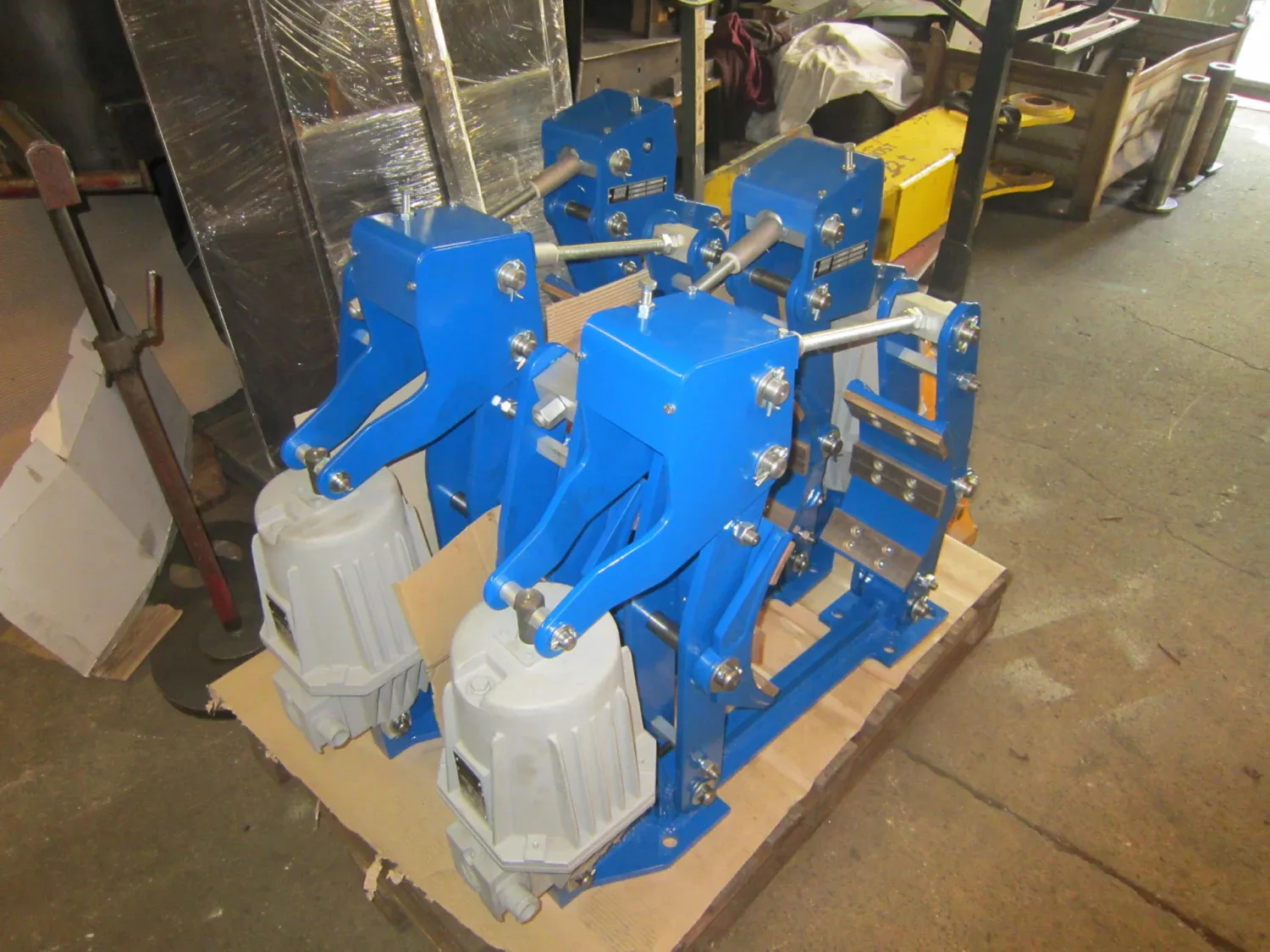
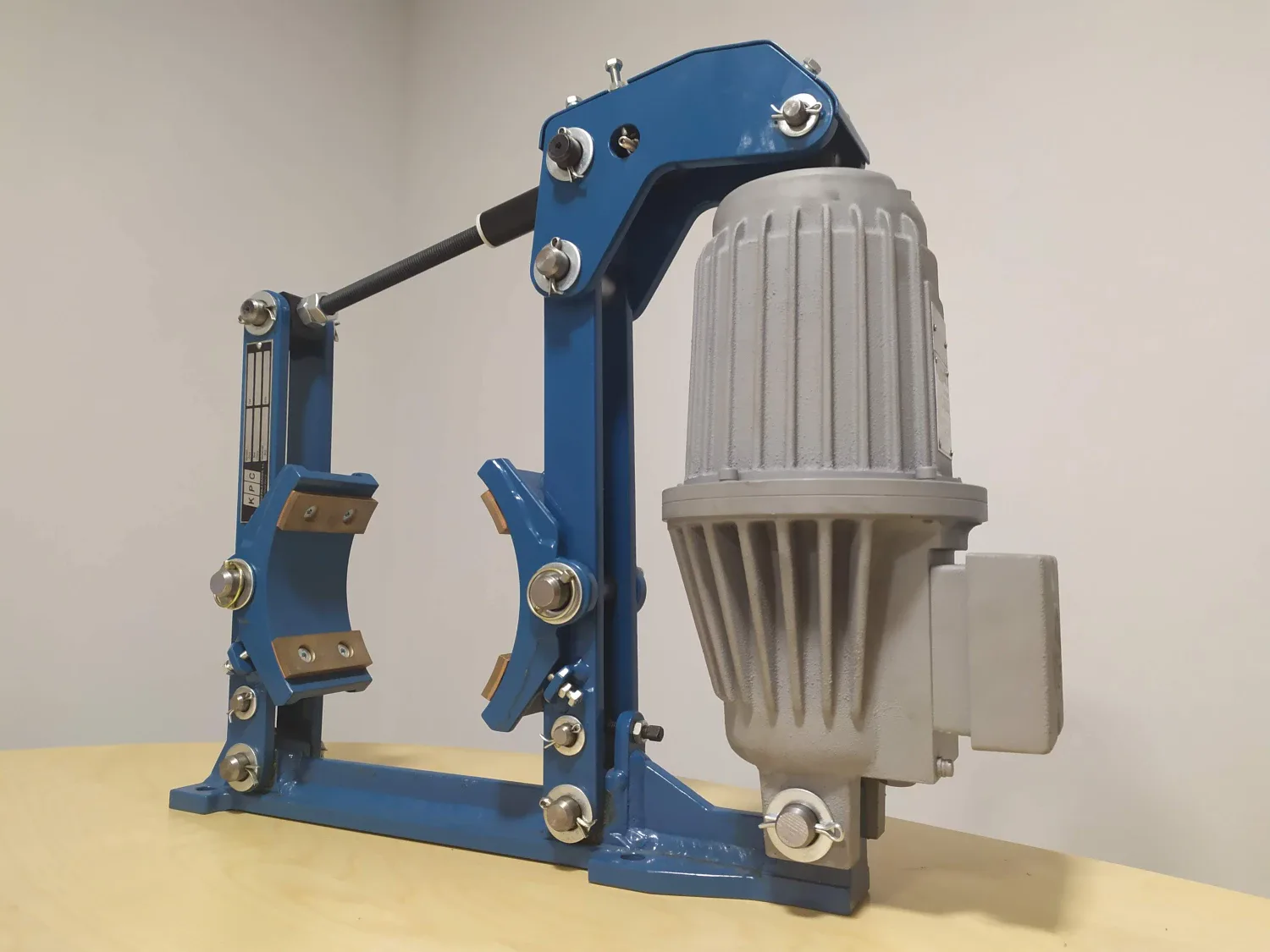
Standard stroke brakes

Standard hoisting brakes consist of a lever mechanism and a pair of brake shoes that apply braking force to a rotating brake drum by means of an electrohydraulic thruster. The brake shoes are fitted with friction linings selected to suit the specific application, operating loads, and the safety requirements for securely holding the suspended load.

The dimensions of the brake and its technical specifications can be tailored to the customer's specific requirements. During the design process, we consider key parameters such as the required braking torque, brake drum center height, mounting dimensions, operating environment, duty cycle, and compatibility with the hoisting drive. A properly selected brake must not only ensure safe stopping and secure load holding but also provide smooth operation without unnecessary shock loads or excessive wear.
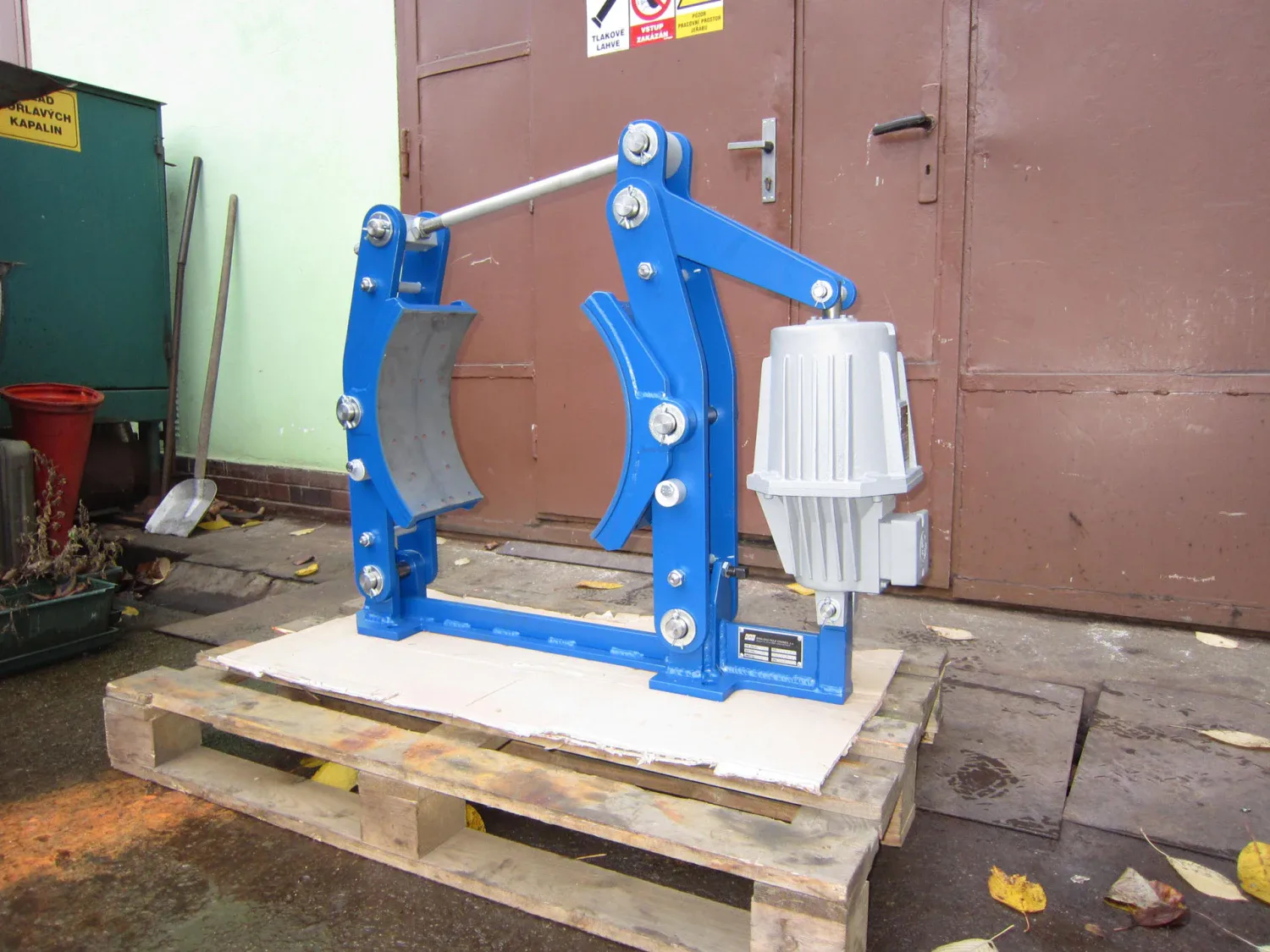
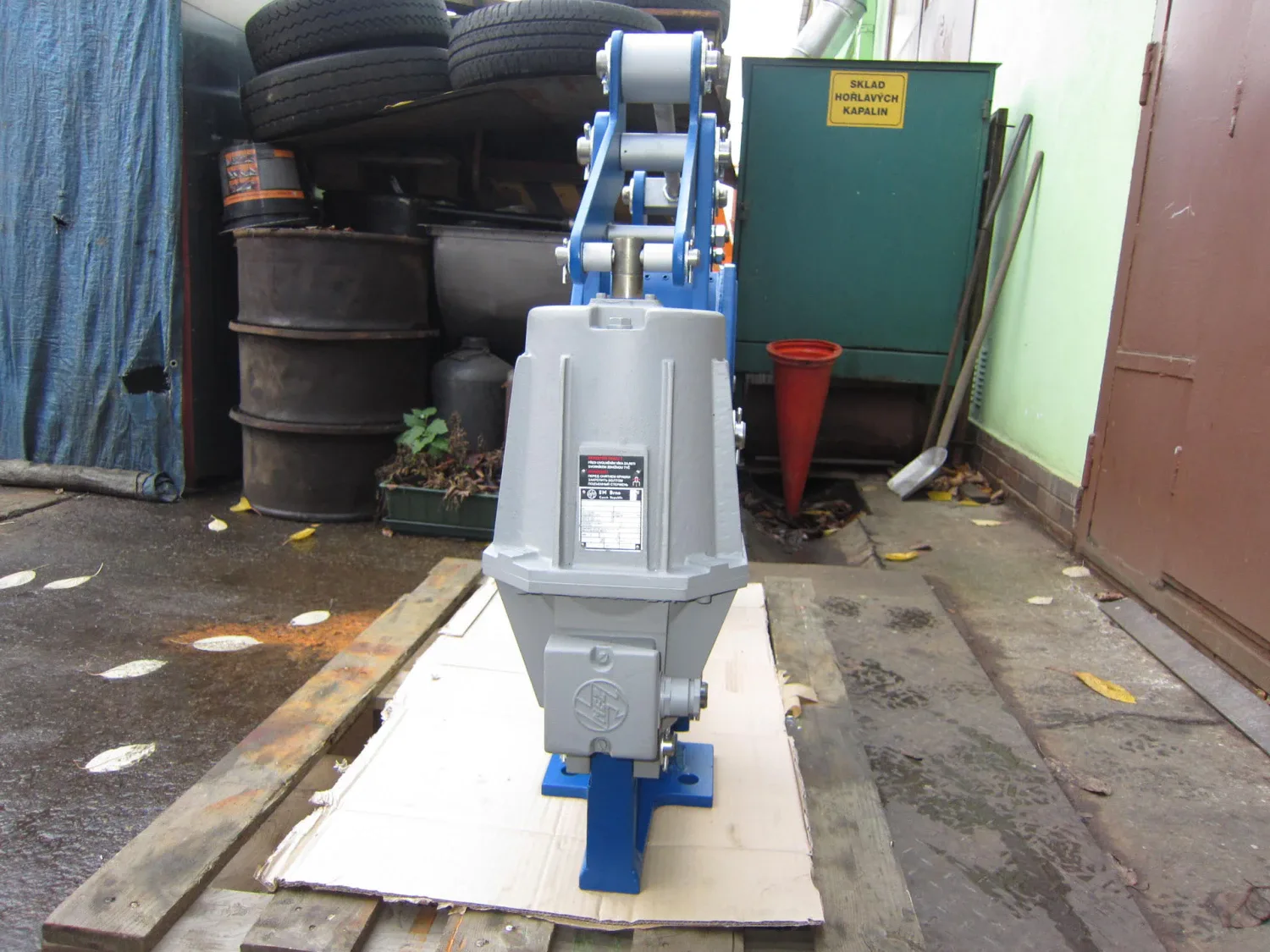
When replacing or modernizing a hoisting brake, we evaluate not only the brake itself but the entire hoisting assembly. This includes assessing the condition of the brake drum, brake shoes, friction linings, linkages, springs, electrohydraulic thruster, drive unit, gearbox, wire rope, and other associated components. If the root cause of the problem lies outside the brake assembly, replacing the brake alone may not provide a lasting solution or eliminate irregular operating behavior.

Typical signs indicating that a hoisting brake should be inspected include an increased stopping distance, jerky braking, unusual operating noise, inconsistent load holding, frequent need for adjustment, or visible wear of the brake shoes. Timely inspection helps prevent unplanned downtime, improve operational safety, and extend the service life of the entire hoisting mechanism.

We supply hoisting brakes as replacement components, for the modernization of existing cranes, and as part of comprehensive repairs to hoisting systems. Our objective is to provide a solution that matches the actual operating loads, service conditions, and safety requirements for secure load holding. Whether you require brake replacement, the integration of an AKO automatic wear compensation system, or a technical assessment of your existing braking arrangement, we will recommend the most appropriate solution based on the actual condition of your equipment.

For cranes with higher lifting capacities or intensive operating cycles, establishing a regular inspection and maintenance program is essential. A hoisting brake that operates in frequent short-duty cycles or regularly holds heavy loads in position is subjected to increased thermal and mechanical stress. Routine inspections should therefore include not only the condition of the friction linings but also clearances in the lever mechanism, the condition of pins, springs, the brake drum, and the proper operation of the electrohydraulic thruster.

Proper coordination between the hoisting brake and the crane control system is equally important. Braking that is too abrupt or delayed can reduce load-handling accuracy, introduce shock loads into the crane structure, and adversely affect operator comfort. During modernization projects, we assess whether the existing braking system remains suitable for the current operating conditions, hoisting speeds, and the weight of the loads being handled. If the production process has changed over the years, it may be advisable to upgrade not only the brake itself but also the associated drive settings to ensure optimum performance, safety, and reliability.

A properly engineered braking system helps ensure safe crane operation even in applications involving repetitive duty cycles, varying load weights, or demanding operating environments. A comprehensive technical assessment makes it possible to determine whether simple adjustment, replacement of the friction linings, repair of individual components, installation of an AKO automatic wear compensation system, or complete brake replacement is the most appropriate solution. Regular professional maintenance of the braking system also reduces the risk of recurring failures and enables planned maintenance shutdowns to be scheduled outside peak production periods, minimizing disruption to operations.

We are happy to help
with your project

Mrs Eva Doležalová
Business Manager, +420 724 000 432
dolezalova@kpc.cz
Do you have a question about a quote or the purchasing process? Write to me or call me and we'll arrange the next steps. I can help you refine your requirements, give you estimated timelines, or go through the necessary documentation and other follow-ups so that the next steps proceed smoothly and without unnecessary delays.

Contact us.
We will reply as soon as possible.

By submitting the form, I acknowledge that my personal data will be processed for the purpose of answering my enquiry in accordance with Privacy and Personal Data Protection Policy.
I would like to receive information about news from KPC at the email address provided.
We are ISO holders
Certifications
ISO 9001:2015
ISO 45001:2018
ISO 14001:2015
COMPANY DATA
King's Field CRANES plc.
Brigádnická 231/69, Brno, 621 00
Czech Republic
ID: 46357408
DIC: CZ46357408
We are authorized by the Technical
inspections of the Czech Republic and Slovakia
We are authorised for the assembly, repair, and inspection of designated lifting and electrical equipment and specified lifting devices.
KRÁLOVÉ POLE CRANES a.s. © 2026
The company is registered in the Commercial Register, Regional Court Brno, sec. B, vl. 1566

Please let us know
project details

By submitting the form, I acknowledge that my personal data will be processed for the purpose of answering my enquiry in accordance with Privacy and Personal Data Protection Policy.
I would like to receive information about news from KPC at the email address provided.

Thank you for
interest with us
collaborate.

Our sales department will attend to your request immediately. Should we require any further information, we will contact you shortly.
Alternatively, you can contact a sales representative directly:
Mrs Eva Doležalová
Business manager
+420 724 000 432
dolezalova@kpc.cz