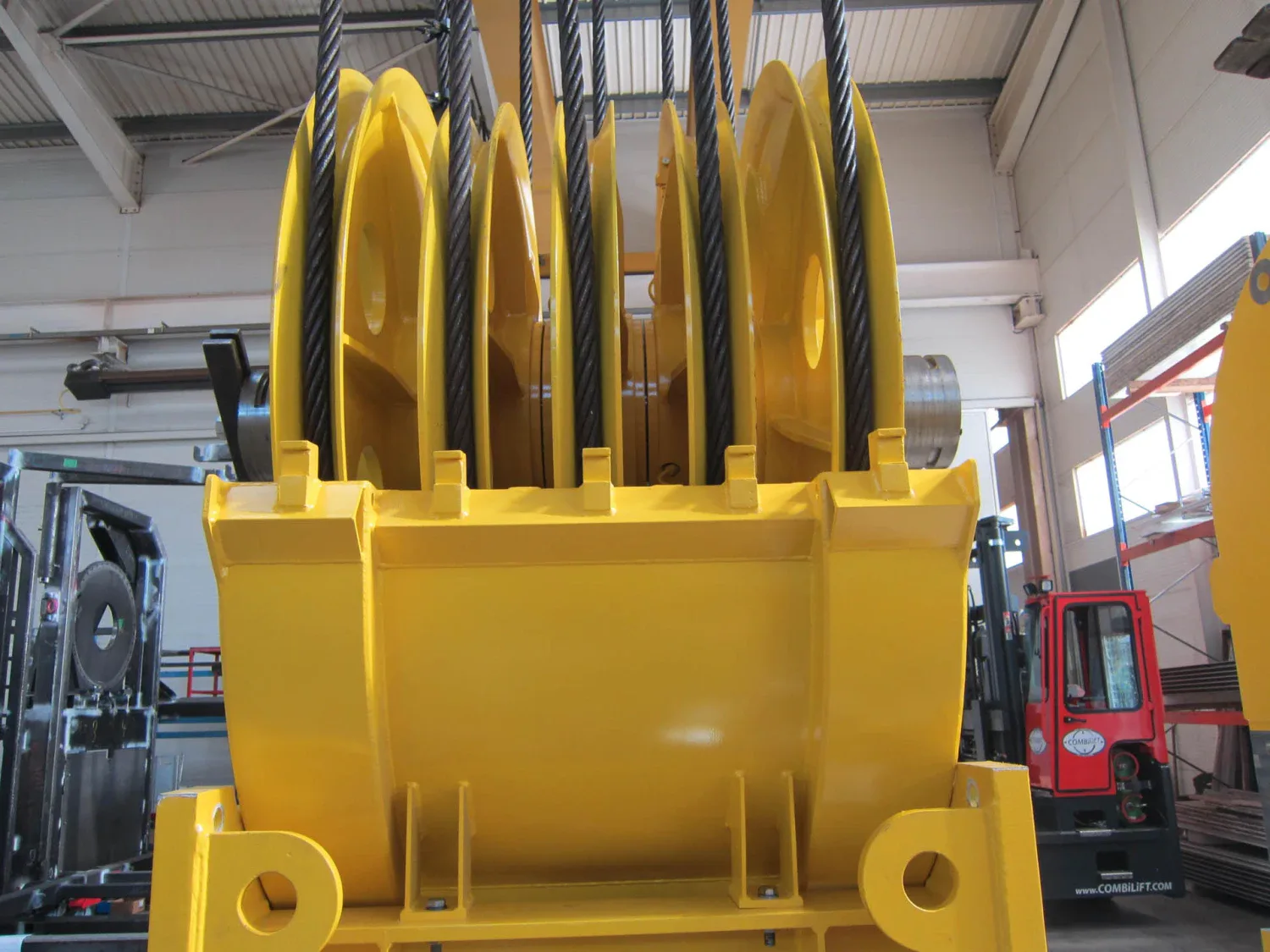
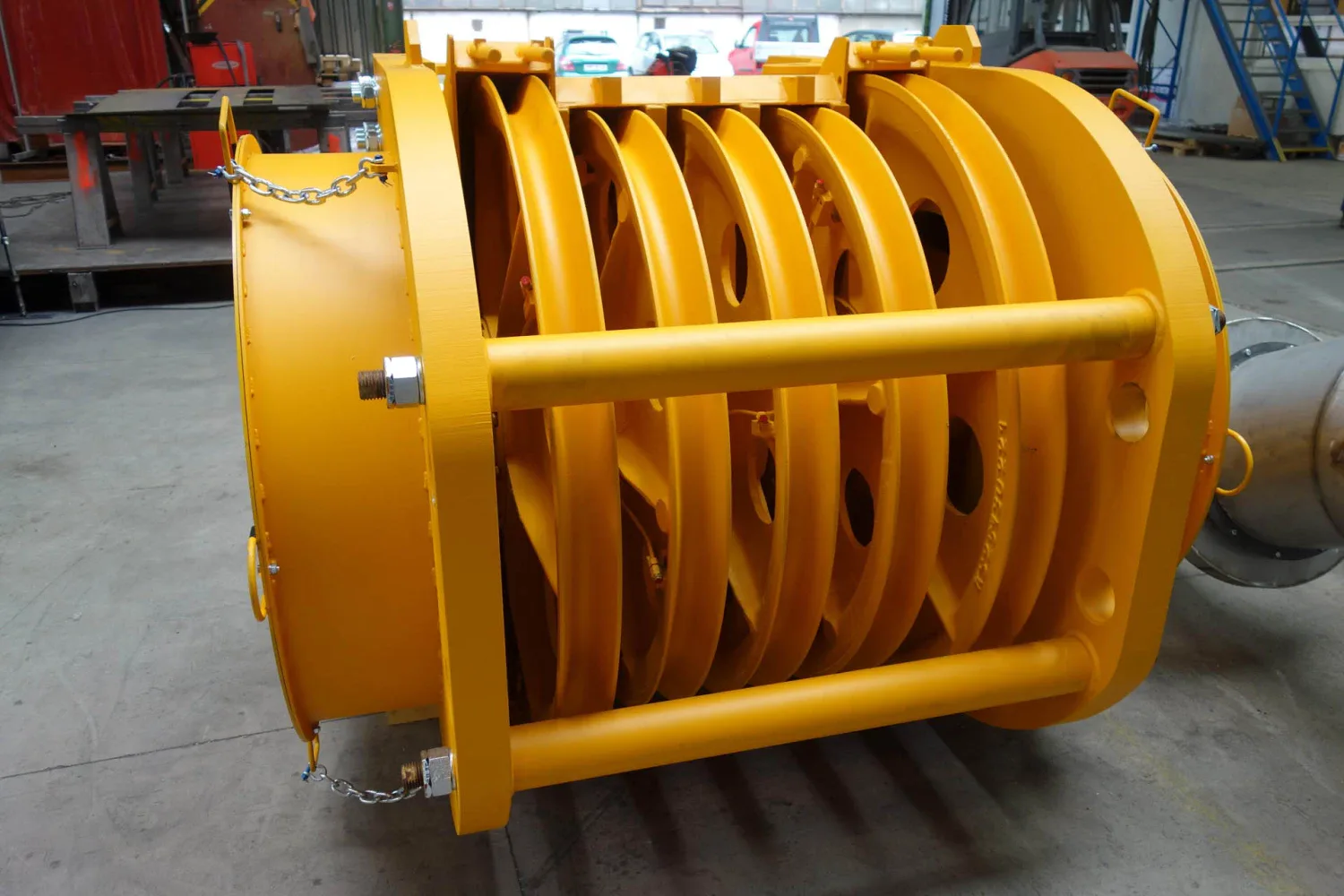
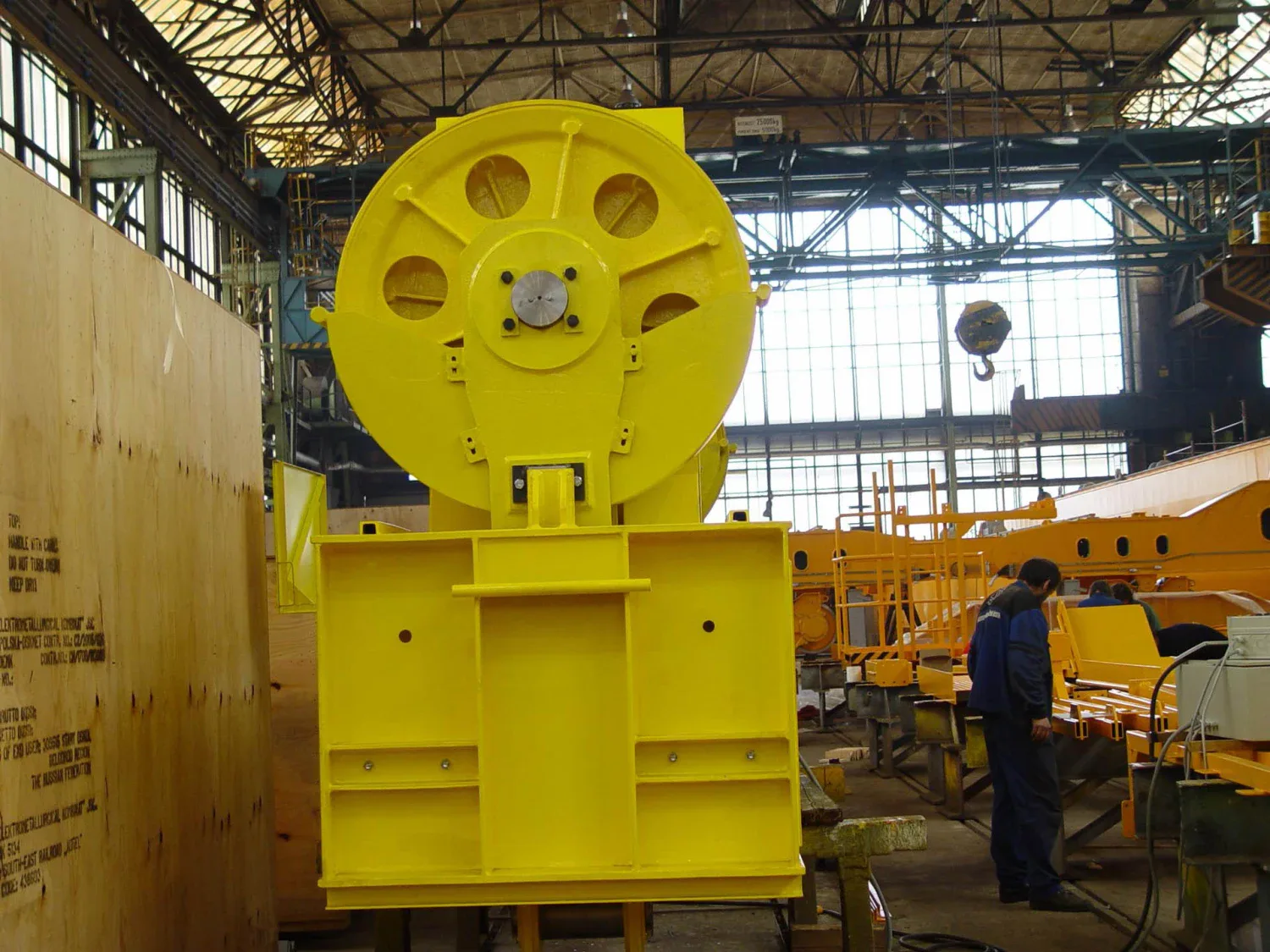
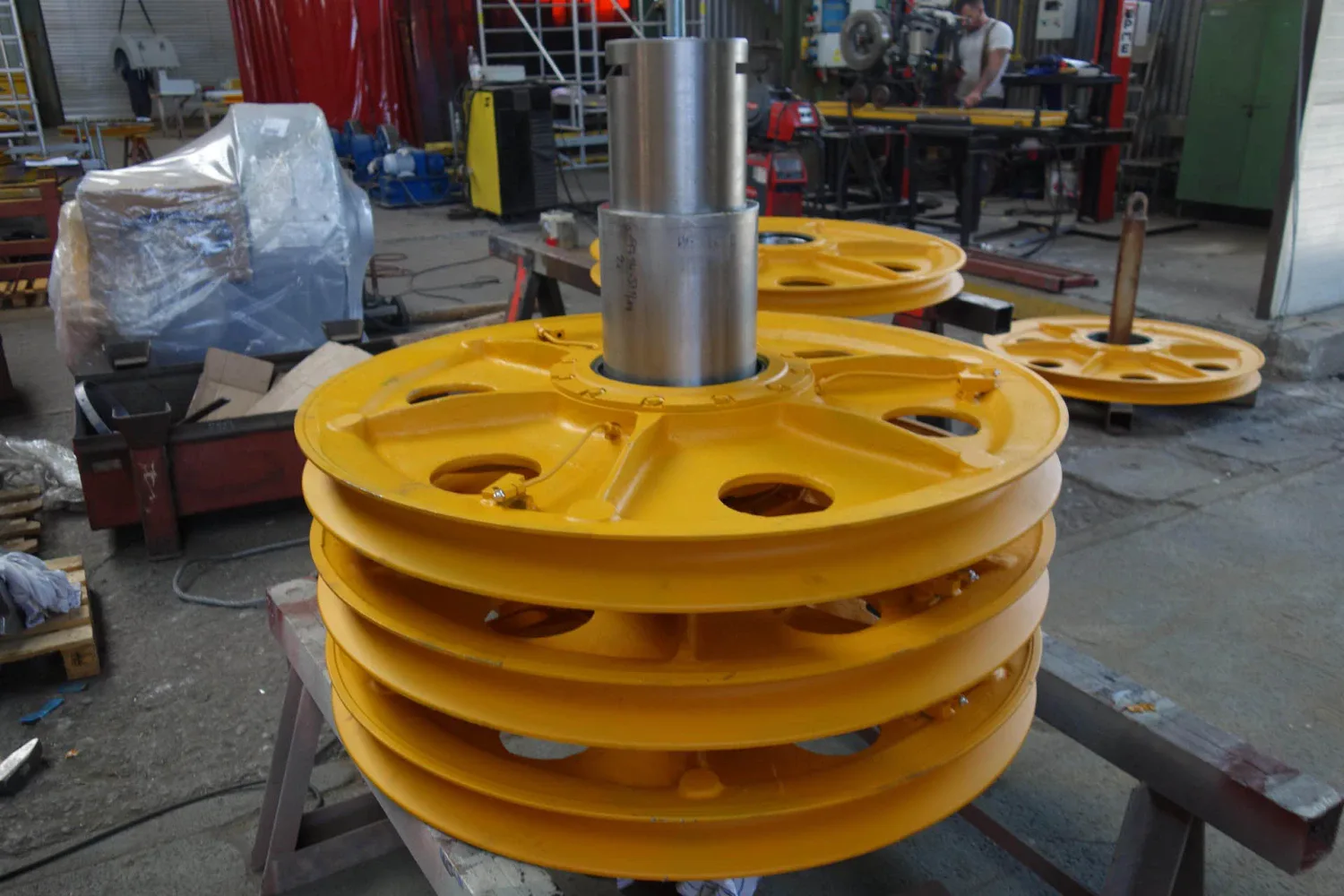
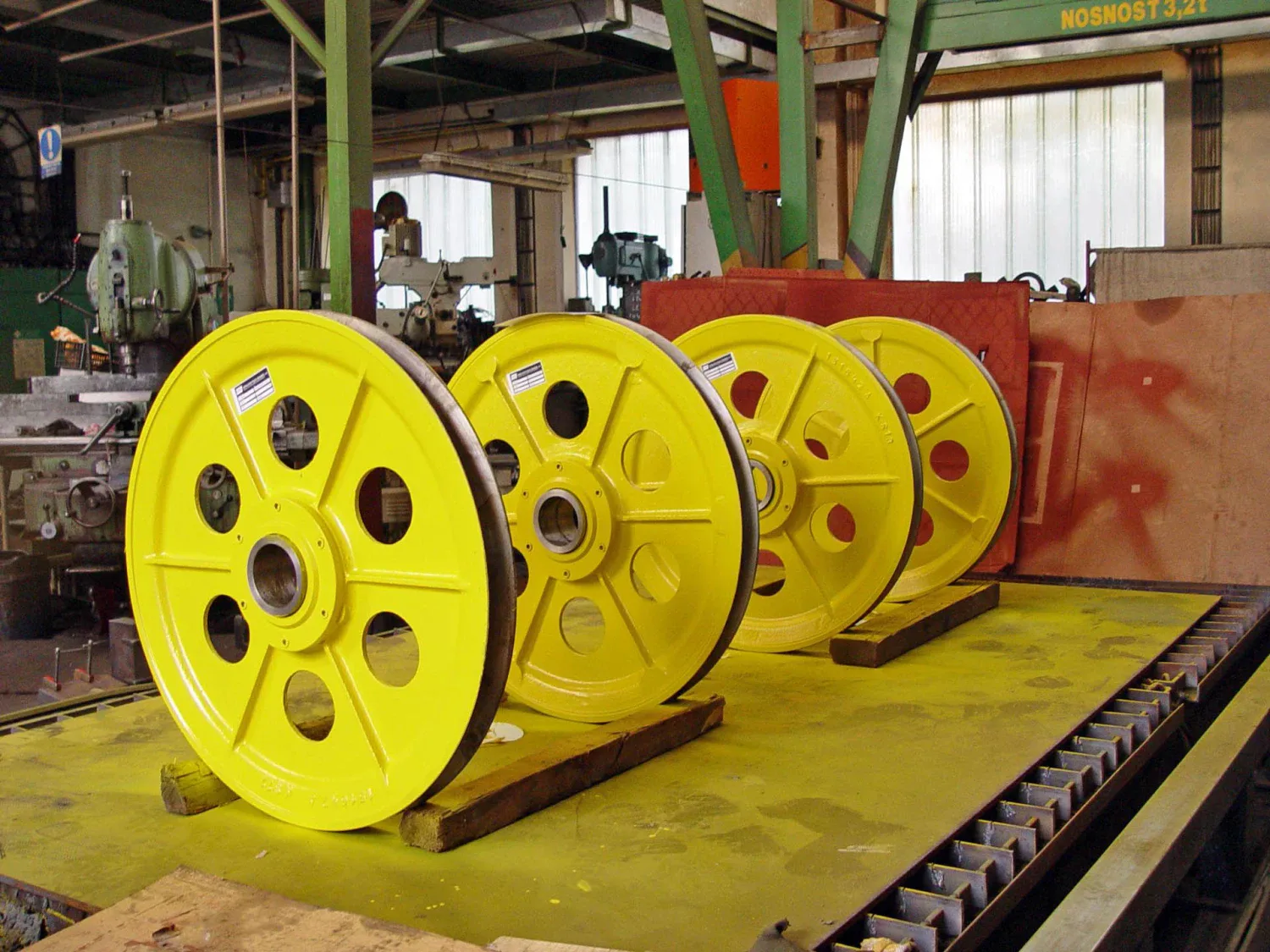
Sheaves for Cranes and Wire Rope Systems
Crane sheaves must be designed to ensure that the wire rope seats correctly in the groove without being subjected to unnecessary stress during operation. Key design factors include the sheave diameter, groove profile and depth, surface finish, bearing accuracy, and alignment with the other components of the wire rope system. An incorrectly sized or worn sheave can lead to accelerated wire rope wear, increased vibration, operating noise, and irregular hoisting performance.
When replacing a sheave, we assess not only the sheave itself but also the condition of the wire rope, rope drum, hook block, pins, bearings, and the associated structural components. Wear may result from normal operation, but it can also be caused by incorrect rope guidance, an improper fleet angle, worn bearings, or deformation of other parts of the hoisting mechanism. A comprehensive technical assessment helps identify the root cause and ensures that the replacement provides a reliable long-term solution rather than simply addressing the symptoms.
Standard and Custom Sheave Designs
We supply both standard sheaves and custom-engineered designs to suit specific crane applications. Replacement sheaves can be manufactured based on the original dimensions, existing technical documentation, or measurements taken from the installed component. For new applications, we design each sheave according to the operating load, wire rope type, number of rope falls, lifting height, and the expected operating conditions.
Selecting the appropriate bearing arrangement is equally important. Sheaves can be fitted with bearing assemblies chosen to match the required service life, rotational speed, operating loads, and maintenance requirements. For cranes operating under intensive service conditions, the design should also facilitate easy inspection, lubrication, and the replacement of heavily loaded or wear-prone components.
Effect of Sheaves on Wire Rope Service Life
The service life of a wire rope is greatly influenced by the design and condition of the sheave. An insufficient sheave diameter, worn or damaged grooves, sharp edges, or improper rope guidance can cause excessive bending stresses, increased friction, and localized damage to the rope strands. Although these issues may not be immediately apparent, they can significantly shorten the wire rope's service life under regular operating conditions and increase long-term maintenance costs.
For this reason, our assessment extends beyond visible sheave wear to include the way the wire rope seats in the groove, the uniformity of rope travel, bearing clearances, and the interaction of the sheave with the rest of the rope system. If the underlying issue is related to rope guidance or system alignment, it is generally more effective to evaluate and optimize the entire wire rope system rather than replacing a single worn component.
Inspection and Maintenance of Crane Sheaves
Regular inspection of crane sheaves helps identify wear before it begins to compromise the safety and performance of the hoisting system. Particular attention should be given to the condition of the rope groove, sheave surface, bearings, pins, rope guides, and any changes in operating noise. It is also important to verify proper lubrication and smooth rotation, as a seized or poorly rotating sheave can rapidly damage the wire rope and place additional stress on other components of the hoisting mechanism.
For cranes operating under intensive service conditions, we recommend establishing inspection intervals based on the operating loads, duty cycle, and environmental conditions. Applications in dusty, humid, or high-temperature environments typically require more frequent inspection and maintenance than standard indoor industrial operations.
Refurbishment, Replacement, and Technical Assessment
We supply sheaves both as individual replacement components and as part of comprehensive crane repair and modernization projects. When refurbishing older equipment, we assess whether the original sheave design remains suitable for current operating conditions. Over time, changes in load weights, operating frequency, hoisting speeds, or wire rope specifications may mean that the original sheaves no longer provide optimal long-term performance.
A comprehensive technical assessment helps determine whether replacing the sheave alone is sufficient or whether other components of the wire rope system should also be addressed. The objective is to ensure correct wire rope guidance, smooth and reliable hoisting performance, extended service life of the lifting components, and dependable crane operation with minimal unplanned downtime.