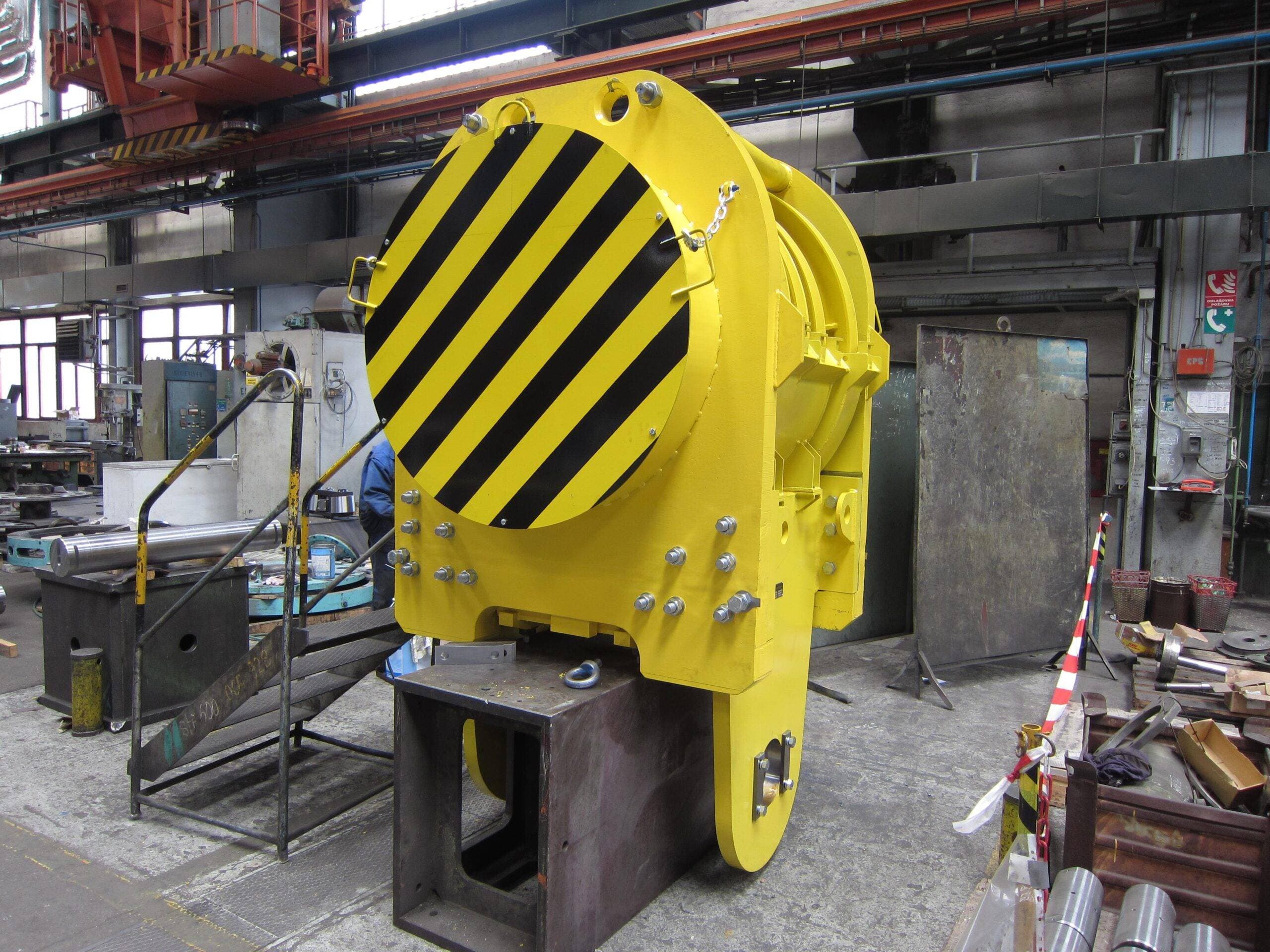
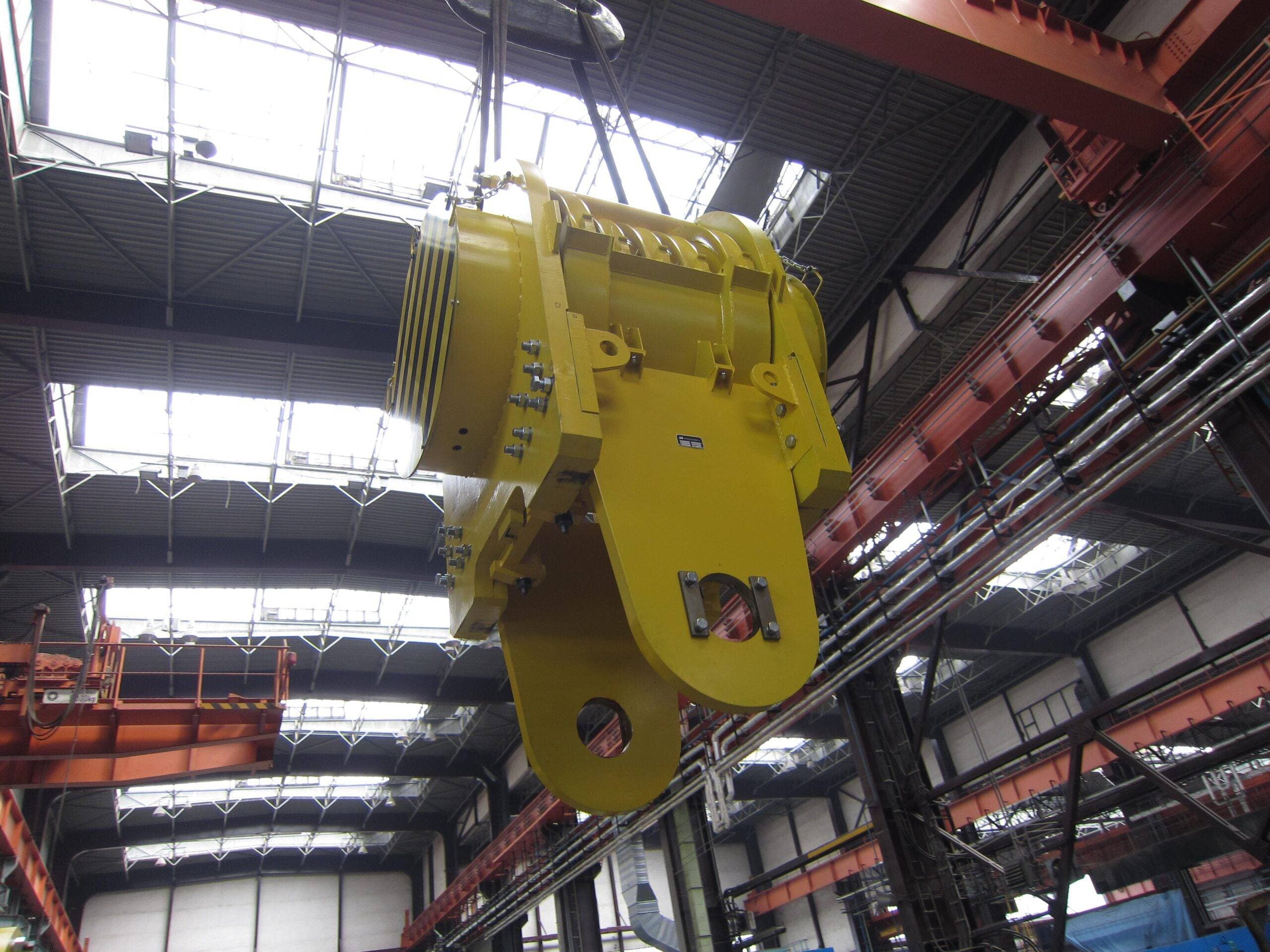
The supporting element of the pulleys are usually forged hooks, which can be single or double. All hooks are always fitted with safety devices to prevent spontaneous release of the load being handled.
In terms of the construction itself, the pulleys can be made as standard, classic or with a shortened construction height. The pulleys can also be fitted with weighing systems of different designs and weighing accuracy. The detected weight of the load may be displayed directly on the hoist, transmitted to the crane or even outside the crane, or a combination of these methods may be used.
For the case when an electromagnet or hydraulic grab is suspended from the pulley, the pulley is equipped with a socket for power supply and control of these devices. The supply voltage and control signals are routed to the pulley from the cat via a cable.
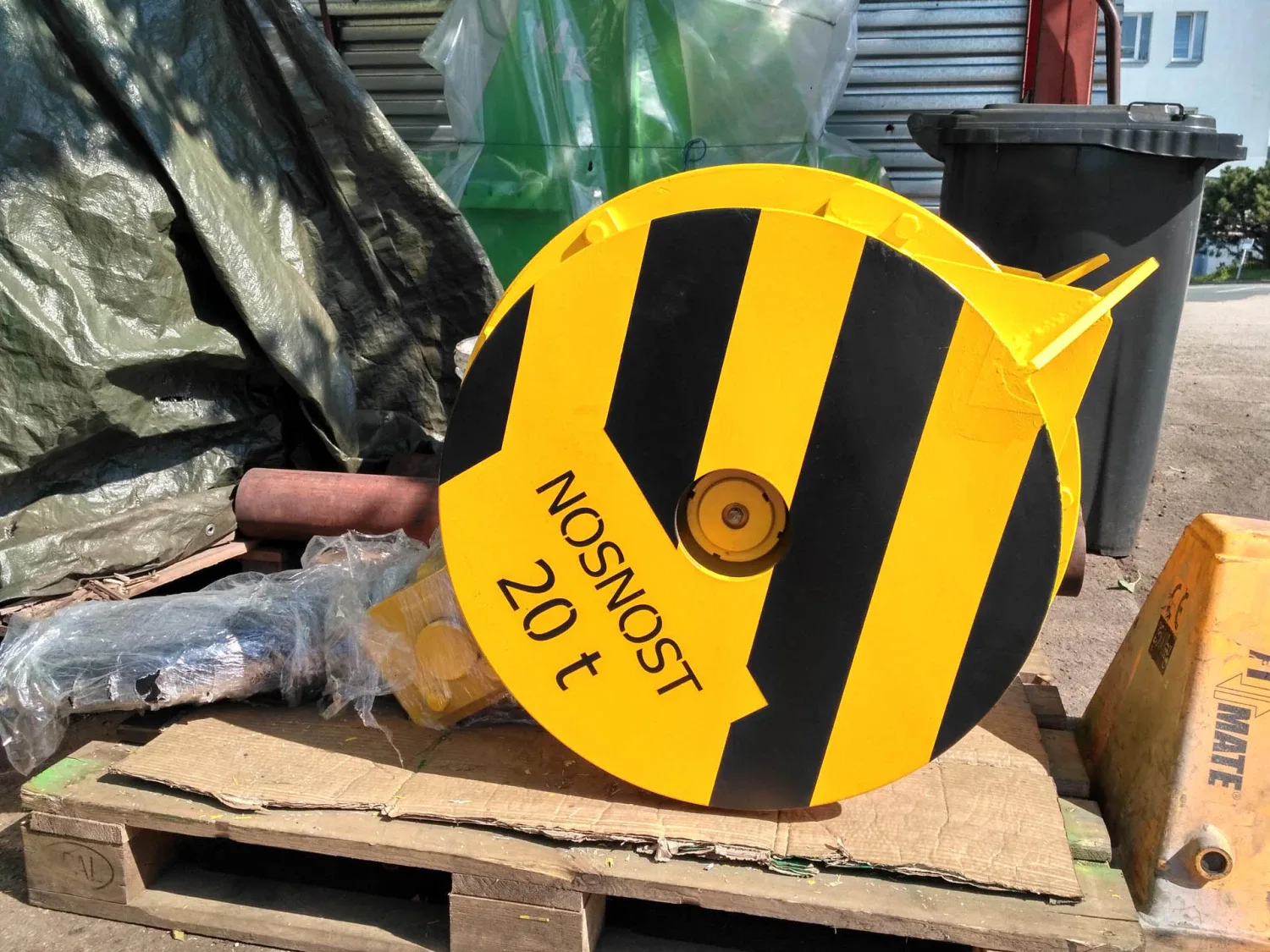
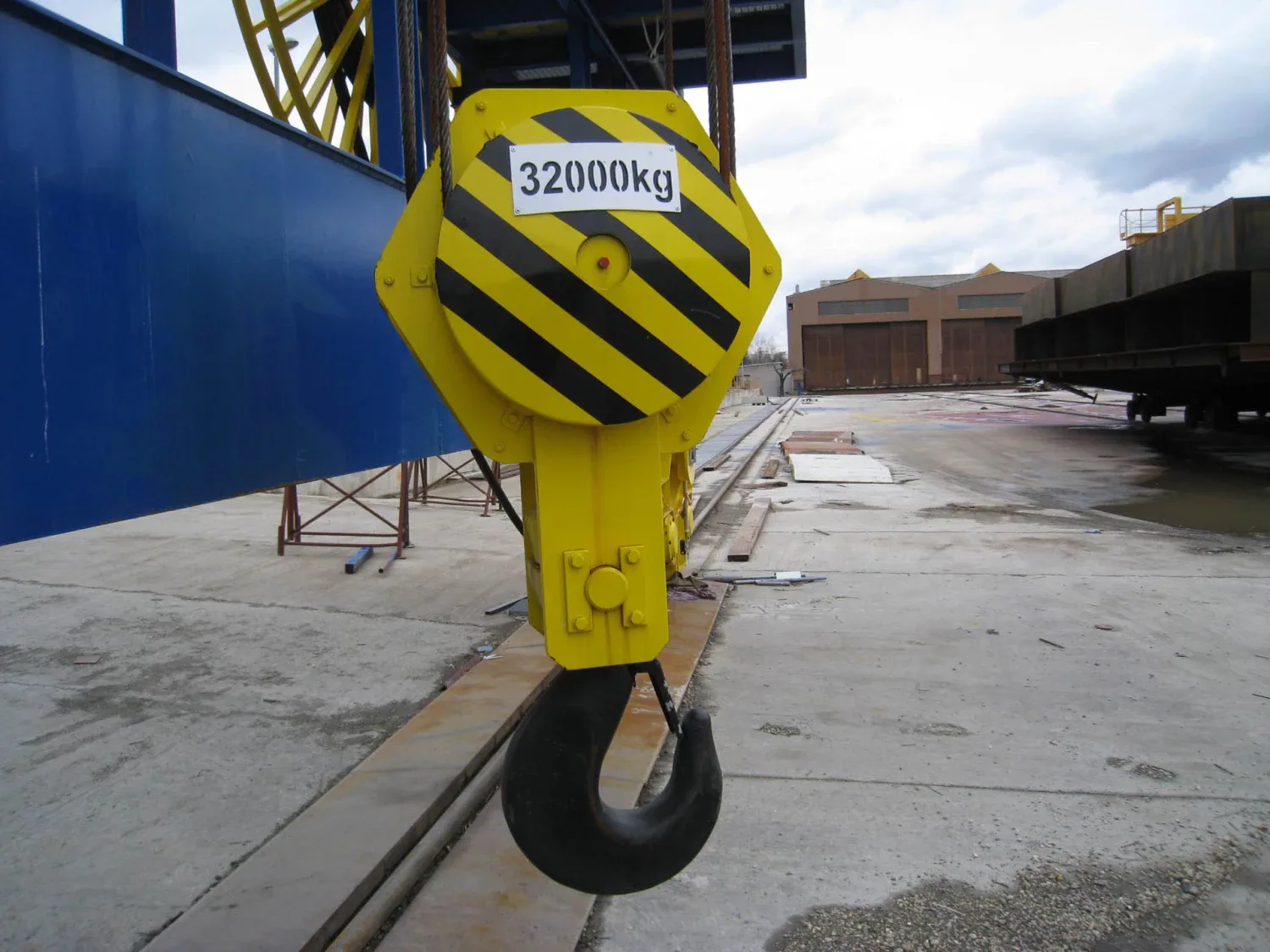
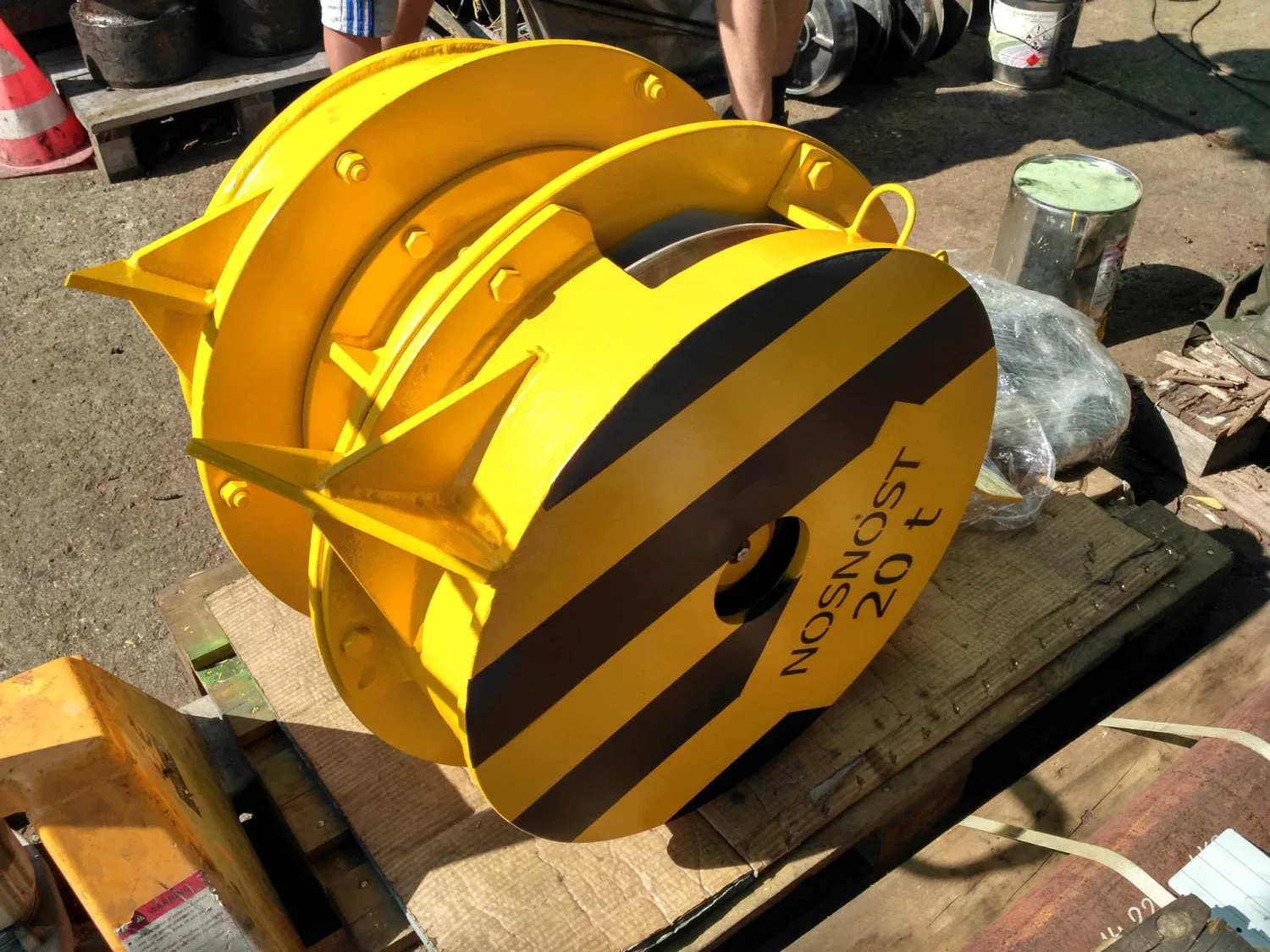
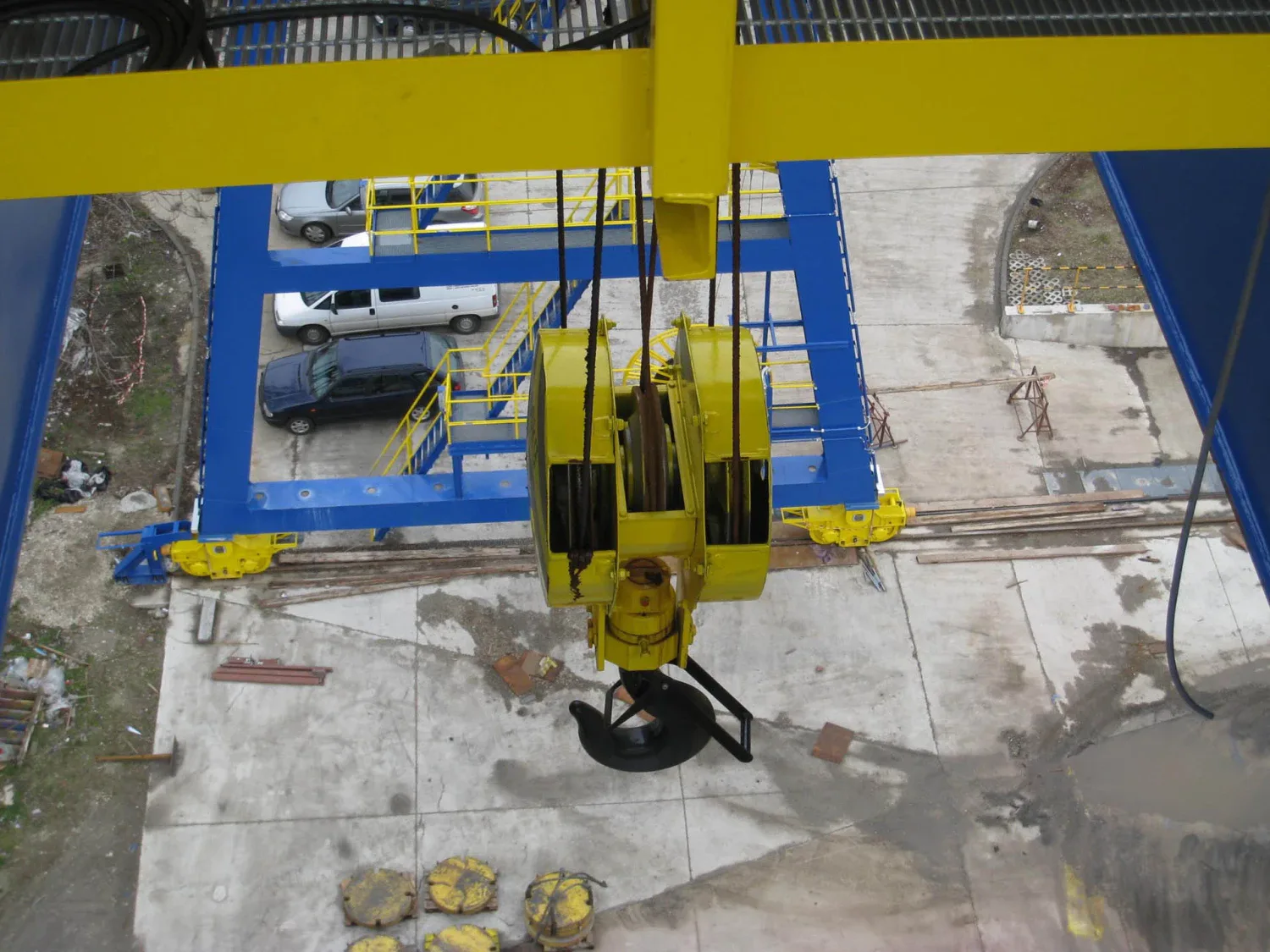
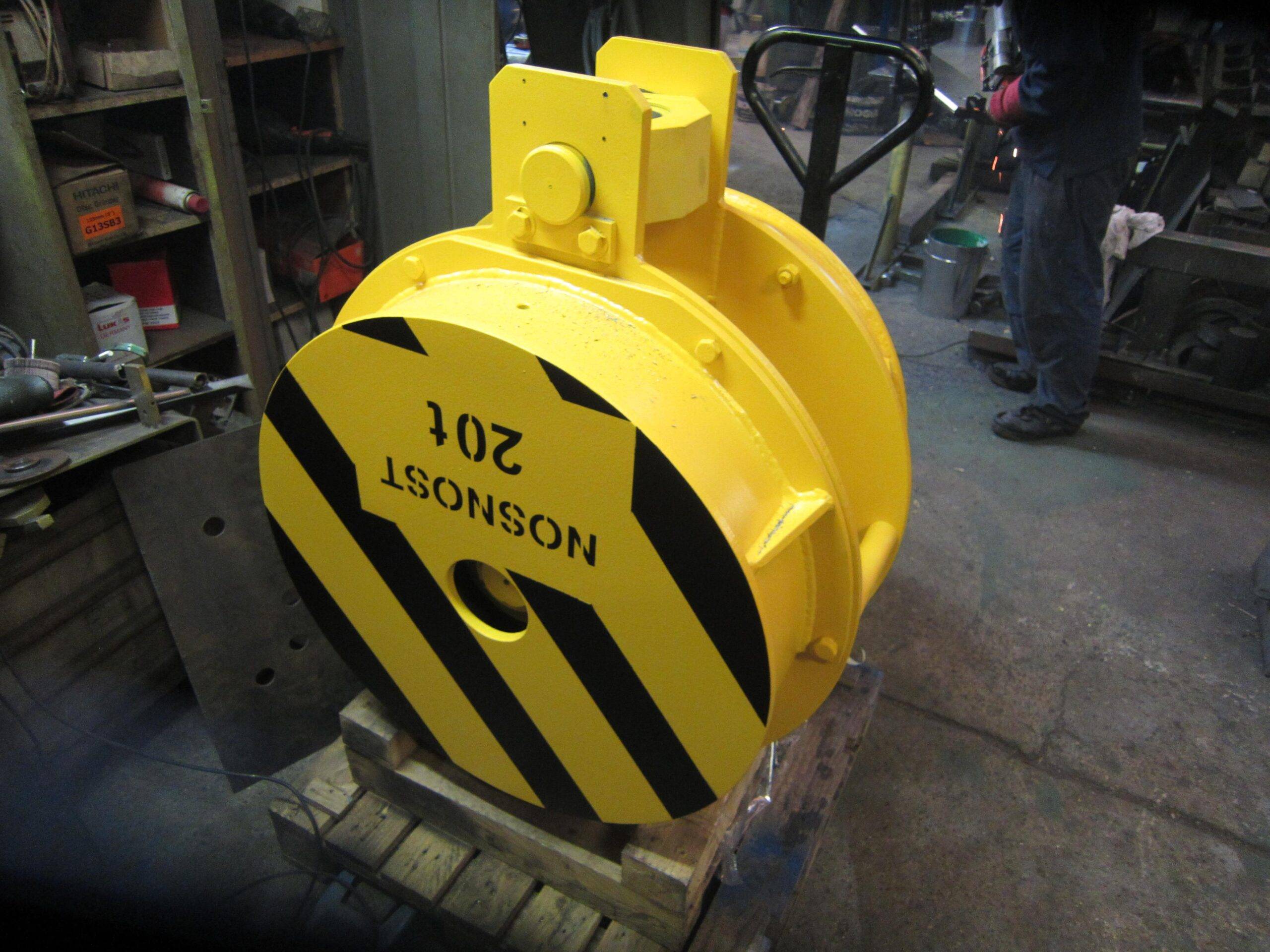
A pulley with a motorised swivel hook can be installed in place of an existing pulley on an existing crane. In this case, this pulley is designed to directly replace the existing pulley without the need for any mechanical modifications to the existing cat structure. It is only necessary to provide the power supply and control signals to the pulley.
The pulleys can also be equipped with a weighing system of different design and weighing accuracy. The detected weight of the load can be displayed on a display directly on the pulley. It can also be transmitted to the crane or outside the crane, or a combination of these methods can be used.
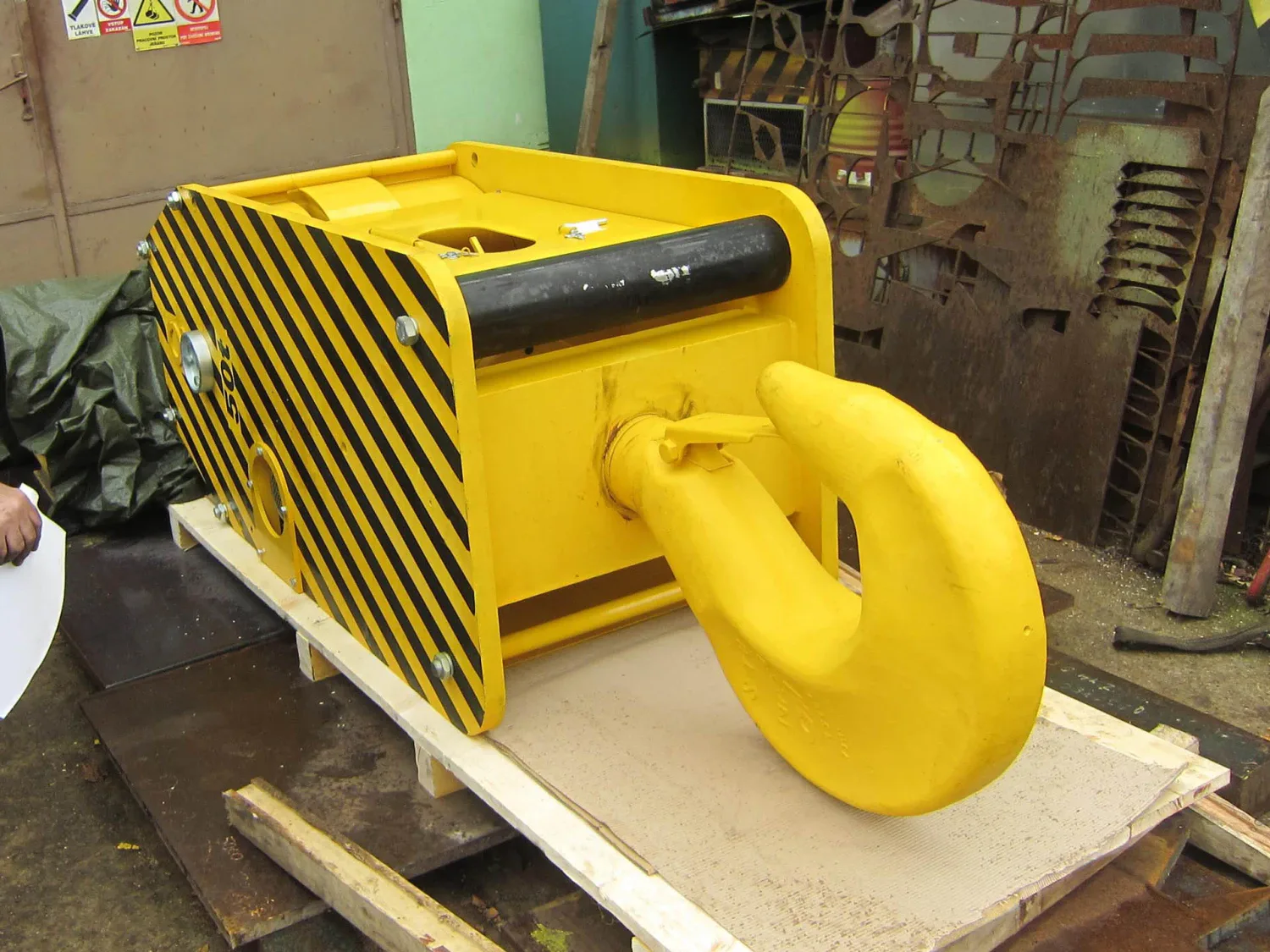
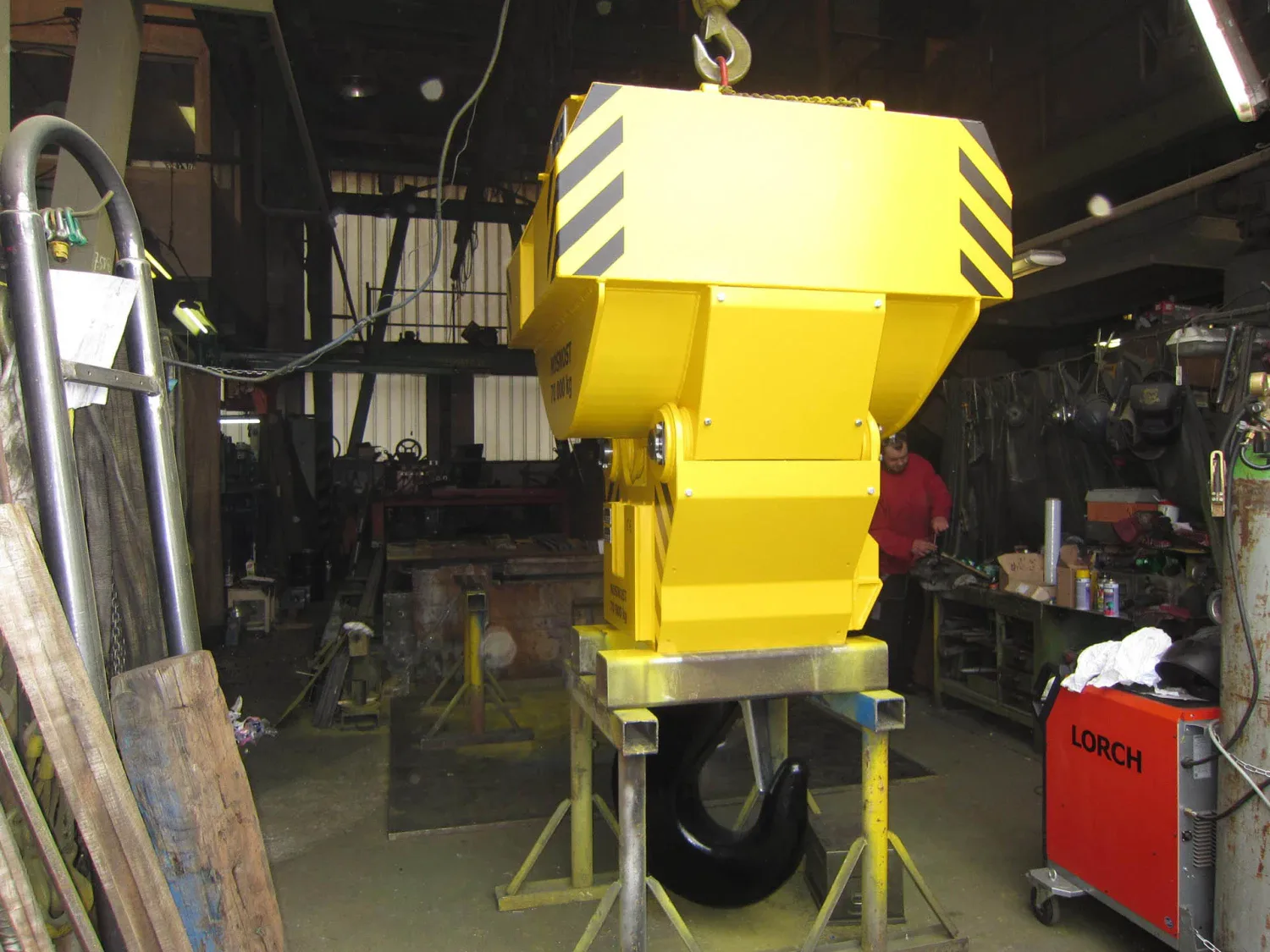
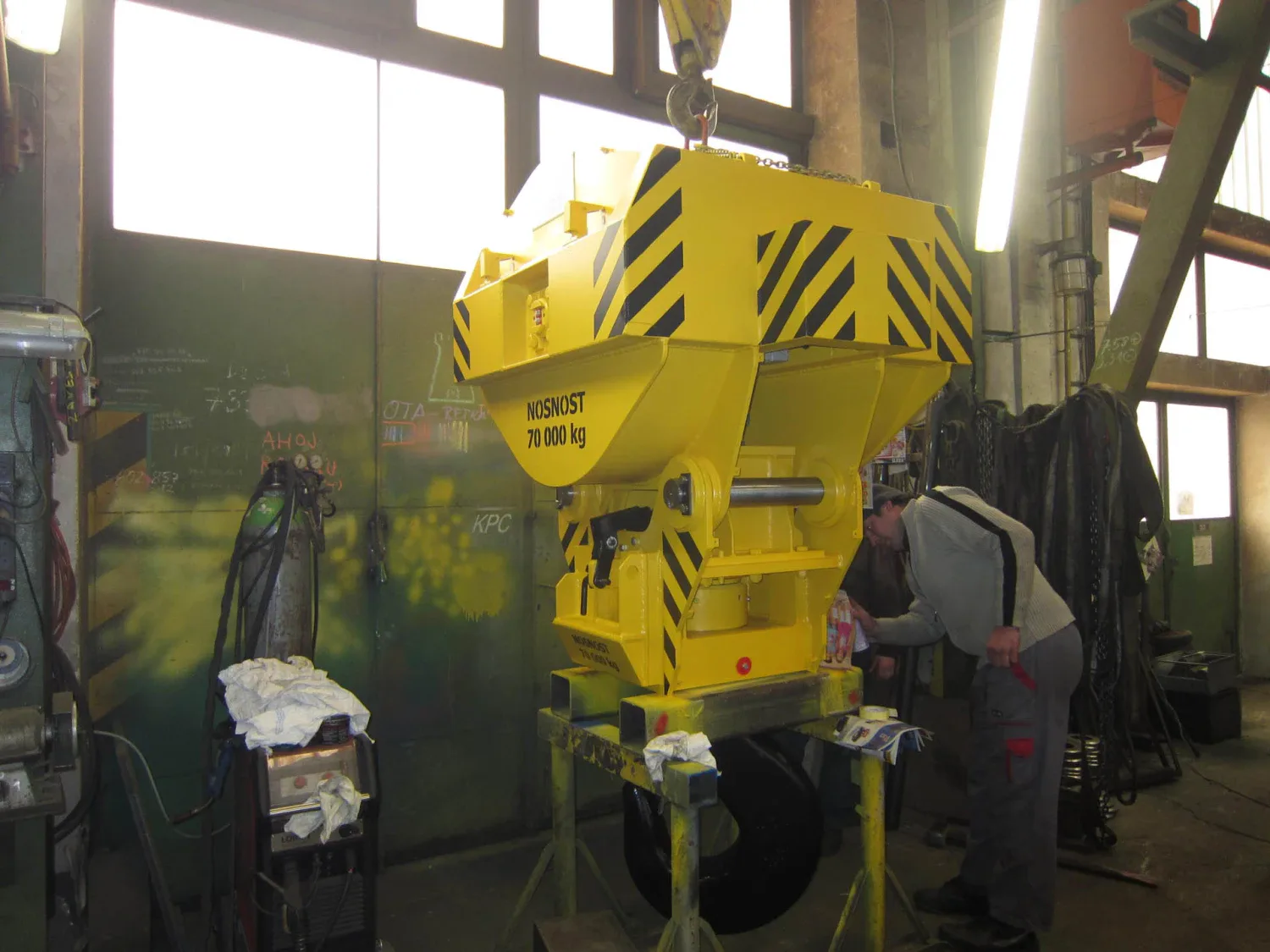
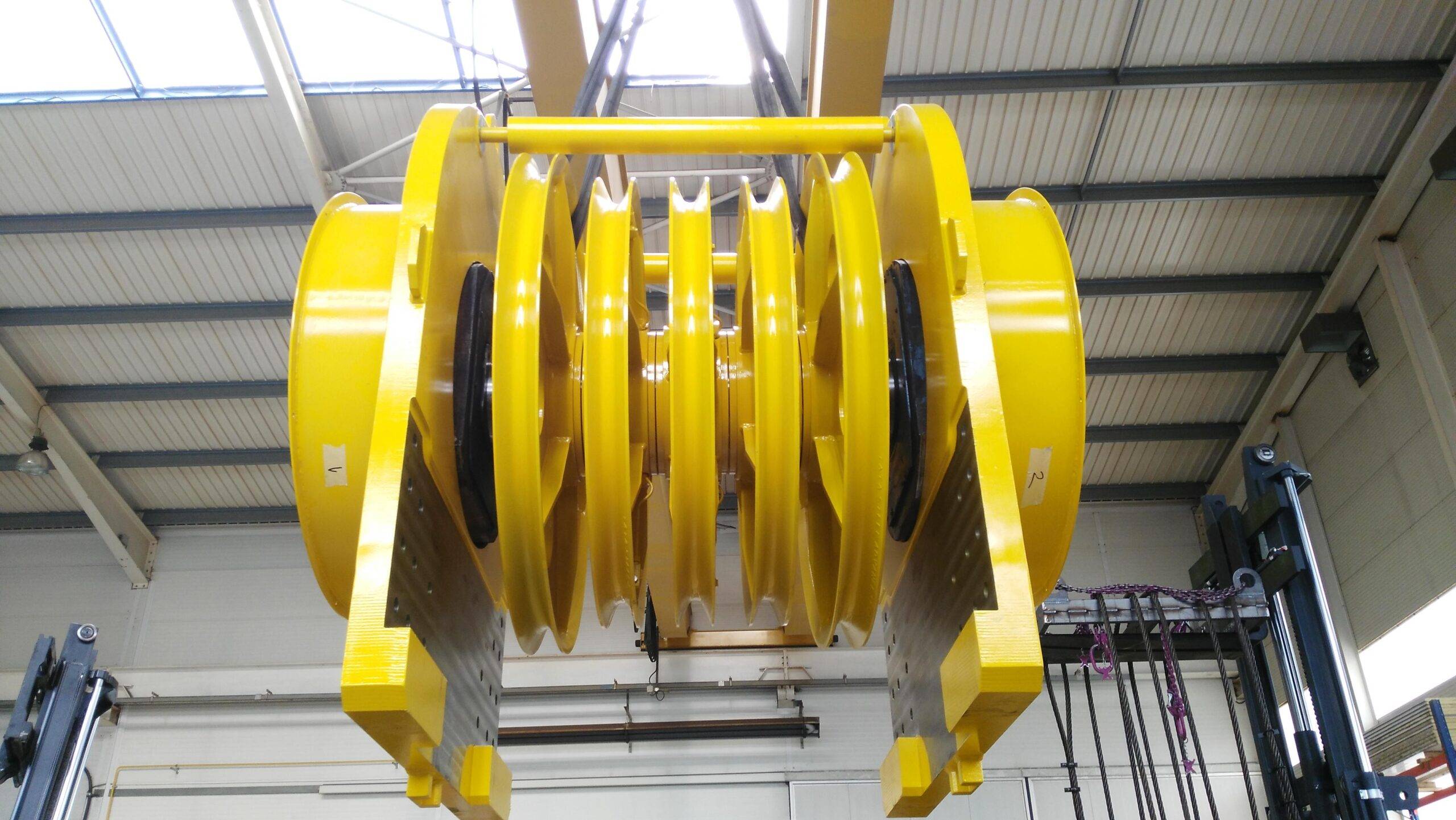
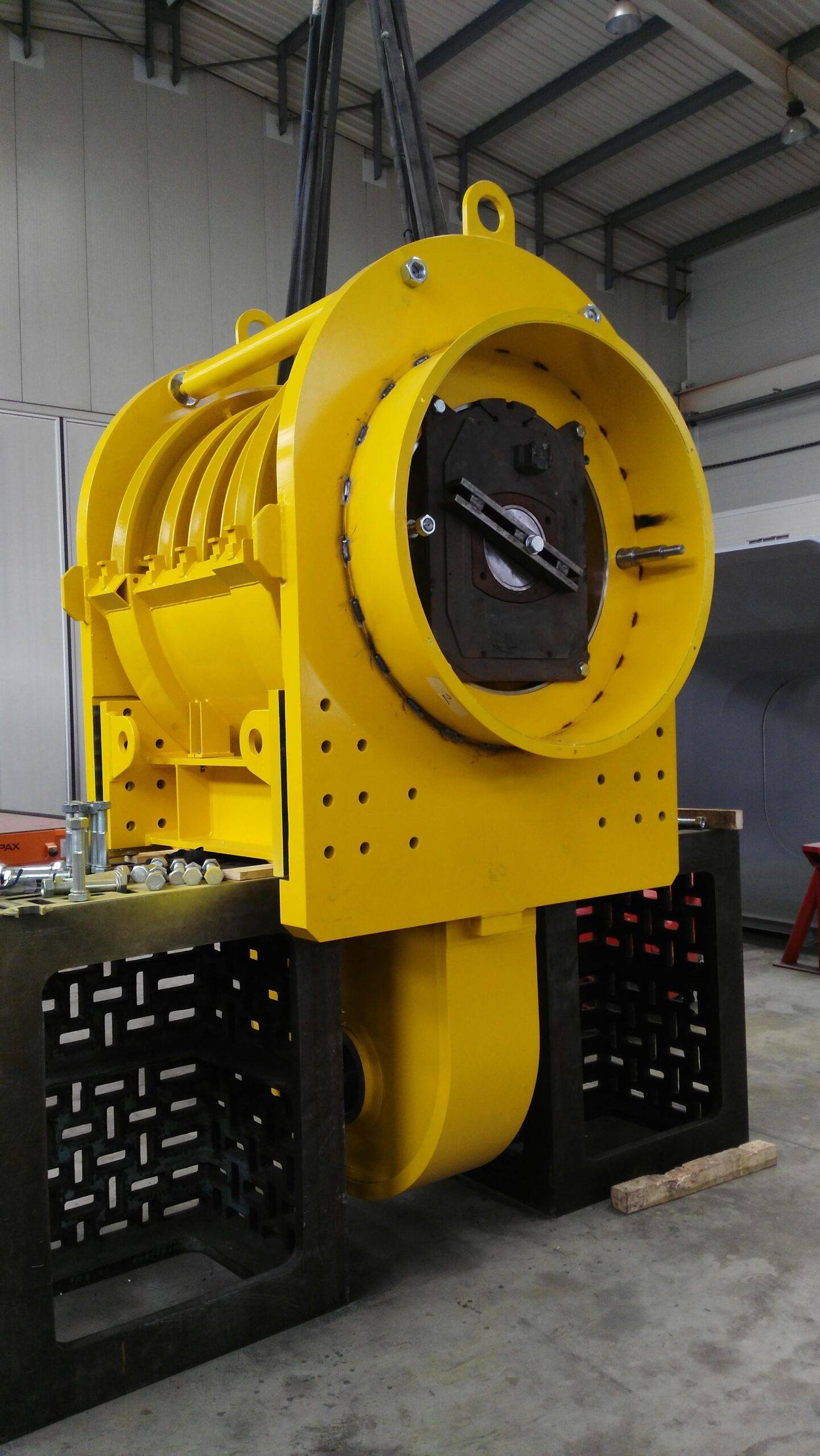
Pulley block assemblies are integral components of crane hoisting systems, designed to guide the wire rope and transmit the load between the rope drum and the lifting beam or other load suspension devices. The arrangement of sheaves within the pulley block distributes the load across multiple rope falls, providing the required mechanical advantage for efficient lifting while ensuring smooth and controlled load movement.
A pulley block assembly consists of the block frame, sheaves mounted on bearings and shafts, and the suspension element. A properly engineered pulley block assembly ensures even load distribution across the wire rope, minimizes rope wear, and contributes to the safe, reliable, and efficient operation of the hoisting system.
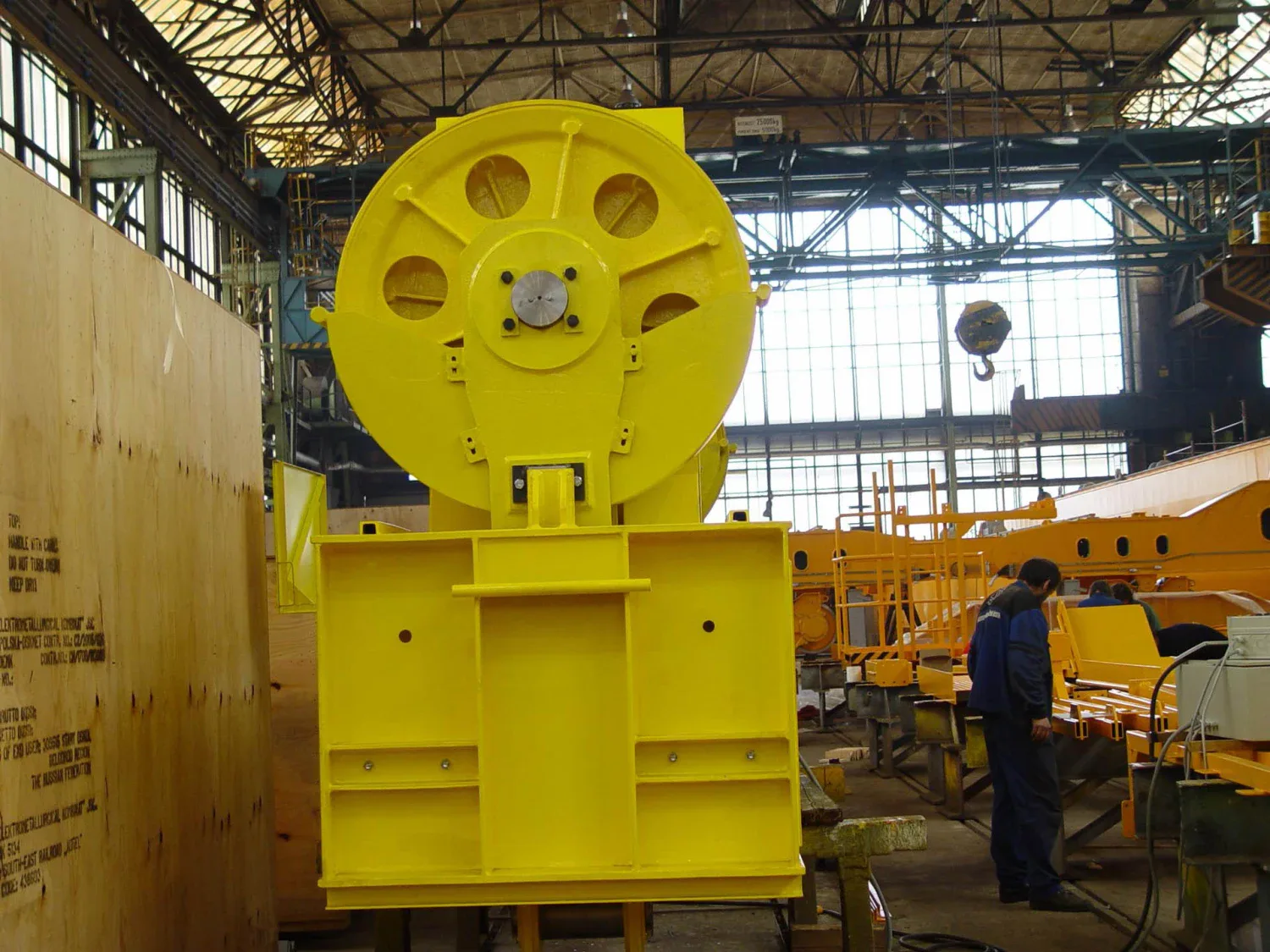
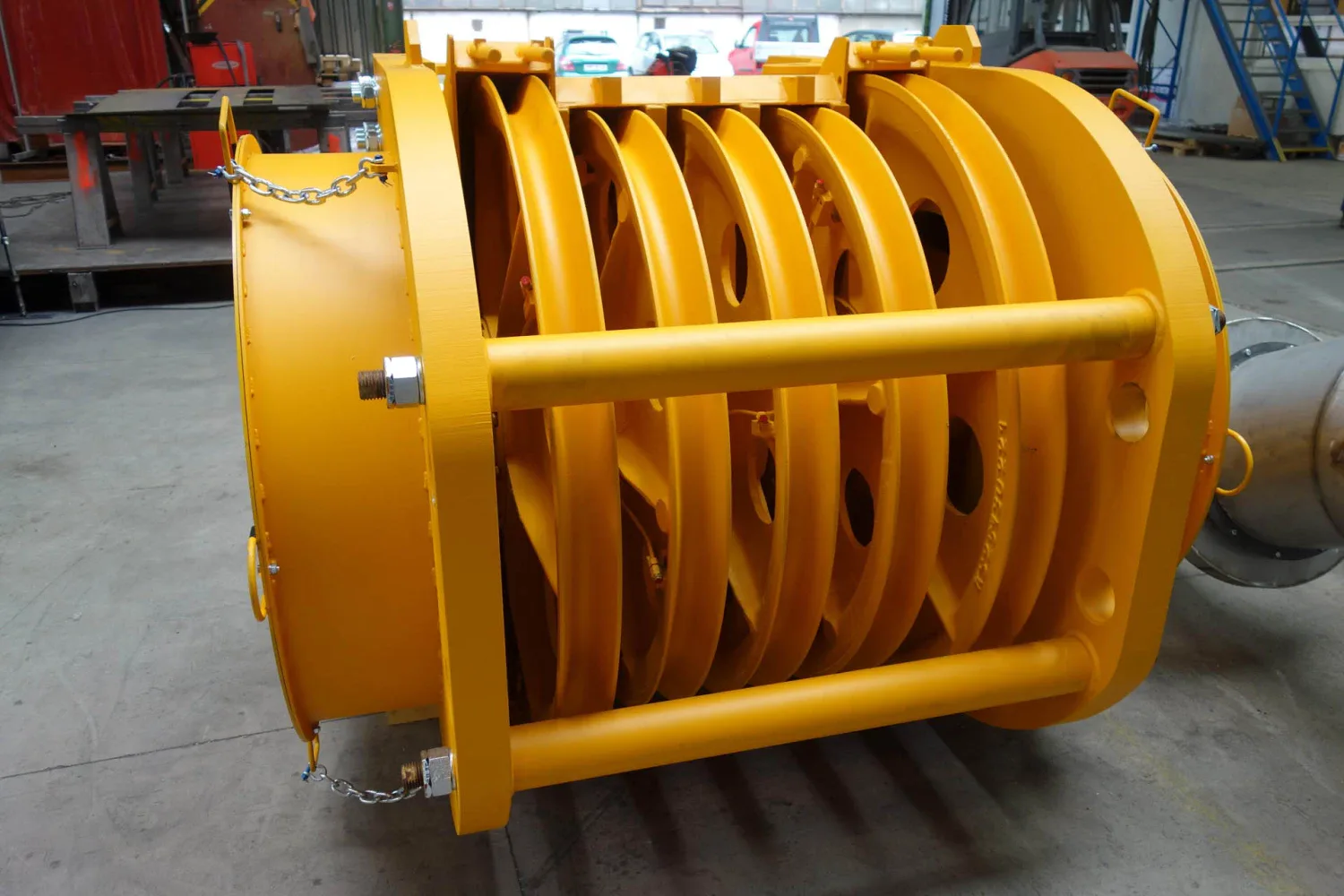
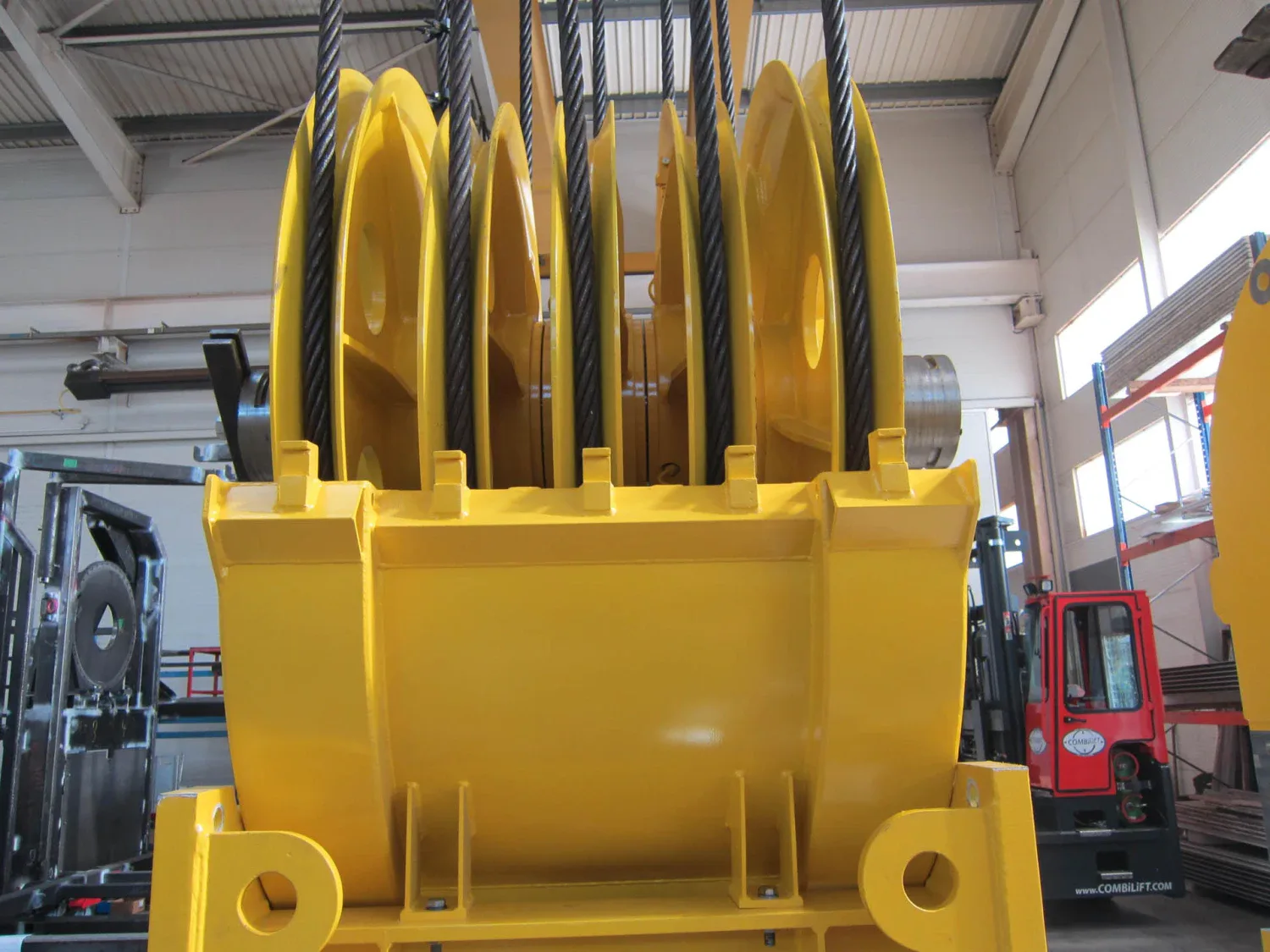
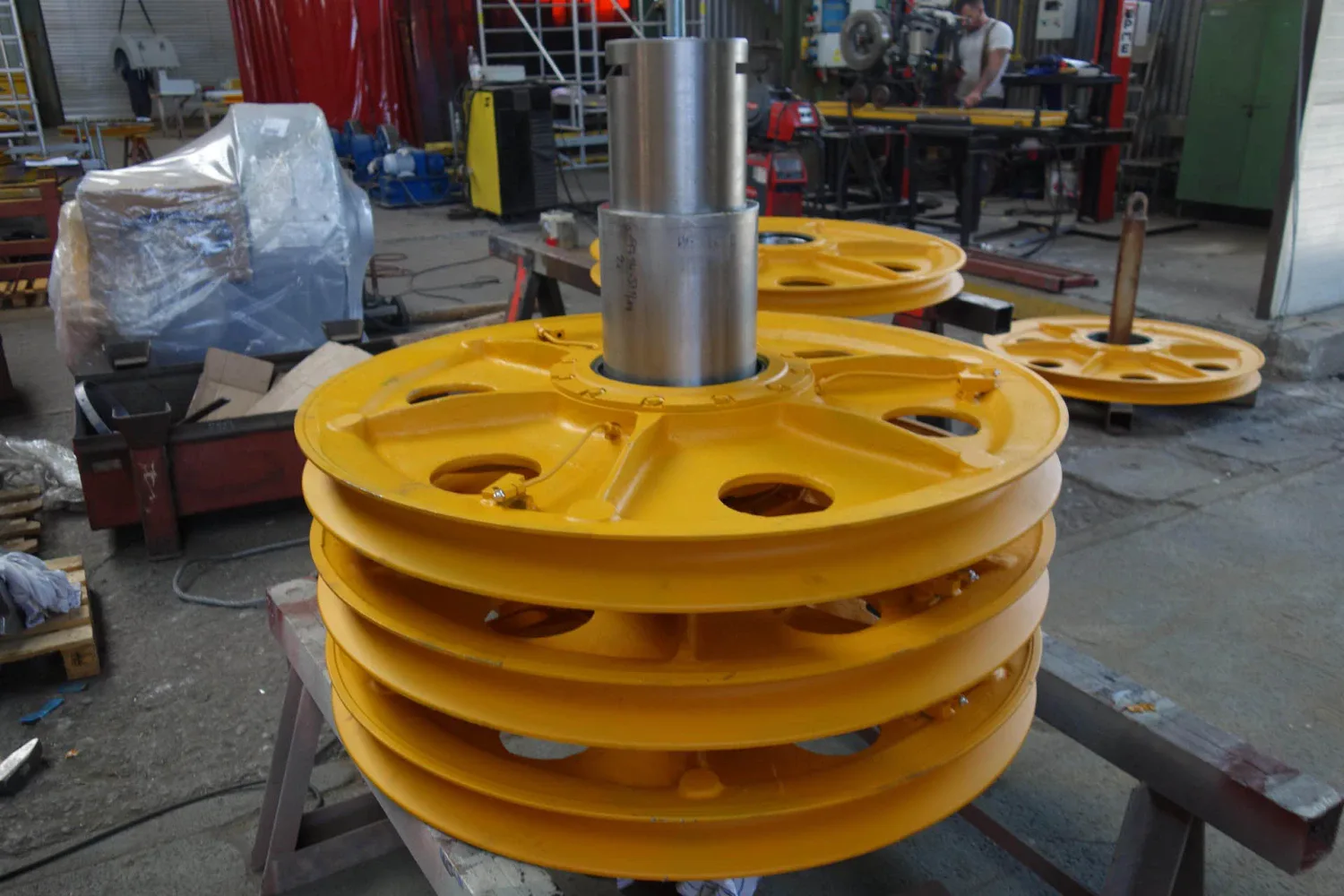
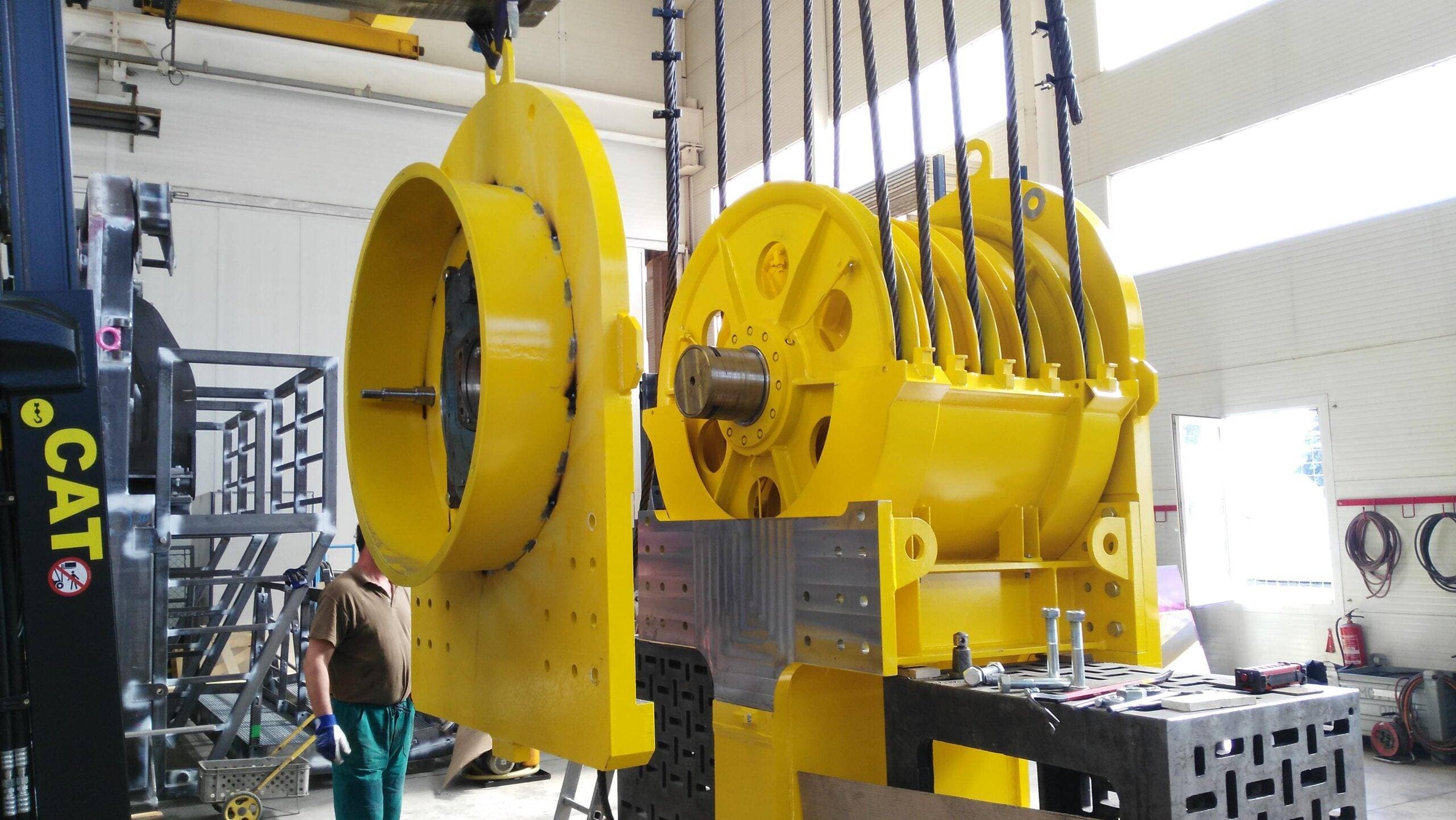
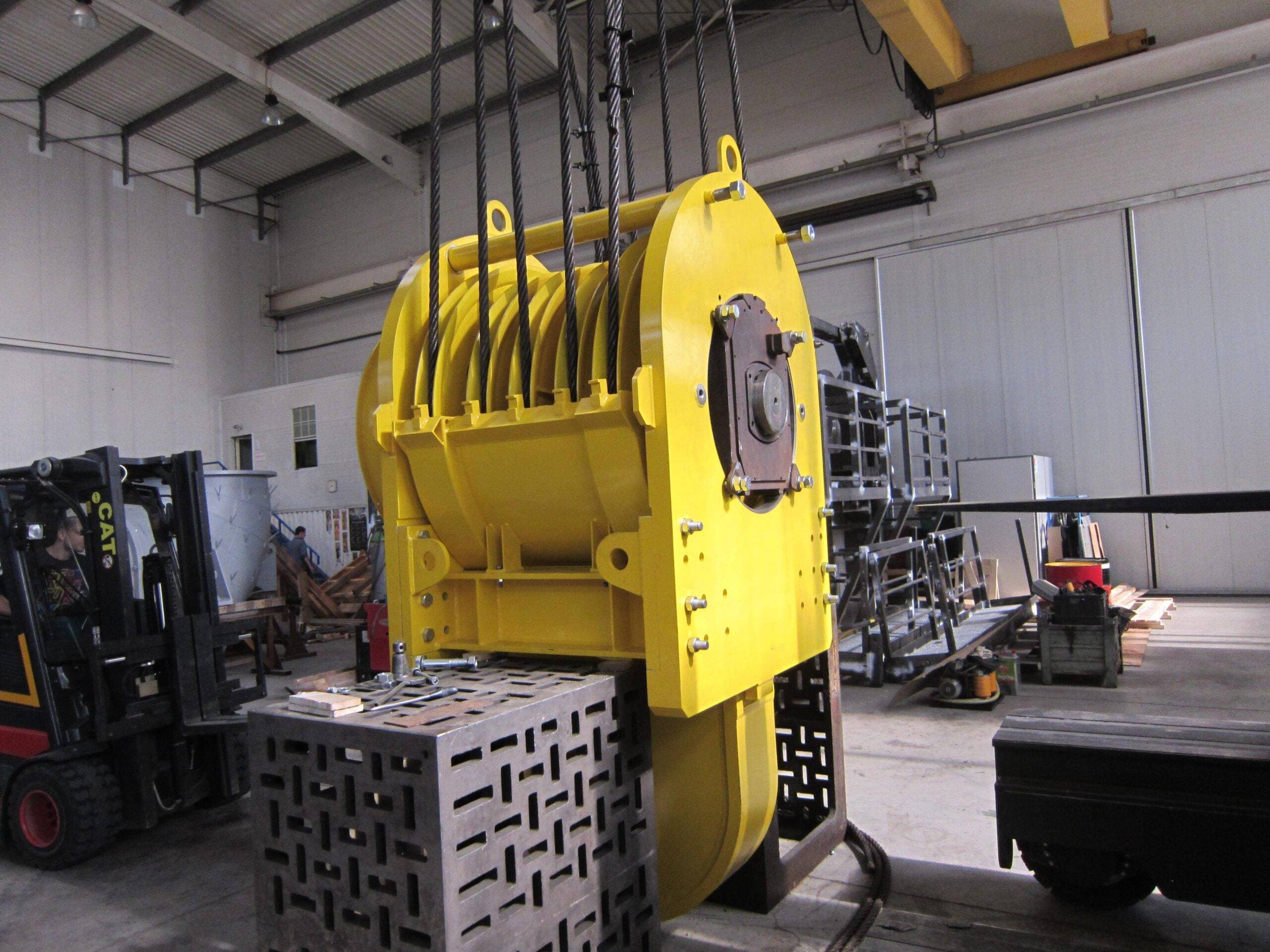
Split pulley block assemblies are used as part of a crane hoisting system to suspend a lifting beam or other load suspension device from the supporting wire ropes of the hoisting mechanism. The assembly consists of a load-bearing frame, wire rope sheaves mounted on a common shaft, retaining components, and protective covers.
The split design with removable side plates allows easier assembly, disassembly, and maintenance of individual components, particularly the replacement of sheaves or load cells directly on site without requiring extensive dismantling of the equipment. The sheaves are mounted on a common shaft using rolling-element bearings, with lubrication provided through grease fittings that remain accessible in various sheave positions. The design also allows the integration of load cells for continuous monitoring and measurement of the handled load.
The entire assembly is engineered with a strong emphasis on operational safety, ease of maintenance, and minimizing downtime during inspection and servicing.