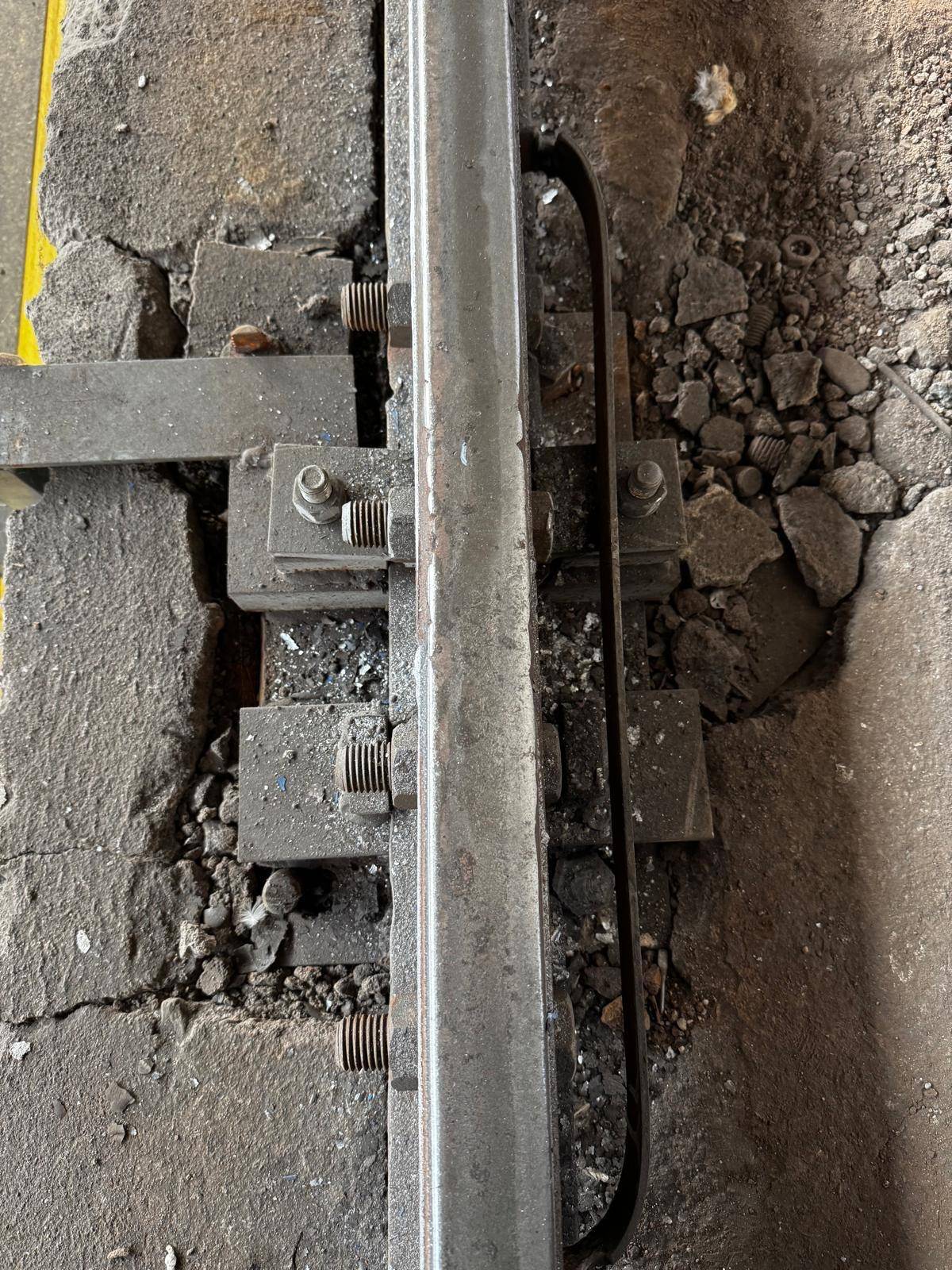
Crane Runway Alignment and Technical Assessment
Before carrying out crane runway alignment, we first assess the actual condition of the crane rails, rail pads, rail clips, anchoring components, and the supporting structure. It is essential to determine whether the issue is simply caused by runway misalignment or whether wear, deformation, or damage has already occurred in any of the components. Based on the inspection results, we recommend the most appropriate corrective measures to address the root cause of the problem rather than merely its visible symptoms.
An improperly aligned or damaged crane runway may result in excessive operating noise, vibration, poor crane tracking, uneven wheel wear, or accelerated deterioration of the travel mechanism. If these issues are left unaddressed, they can place additional stress not only on the crane itself but also on the rails, runway girders, anchoring system, and the building's supporting structure. Timely corrective action helps reduce the risk of major failures, extend the service life of the equipment, and minimize the need for costly repairs and extensive maintenance.
Crane Rail Alignment and Repair of Damaged Components
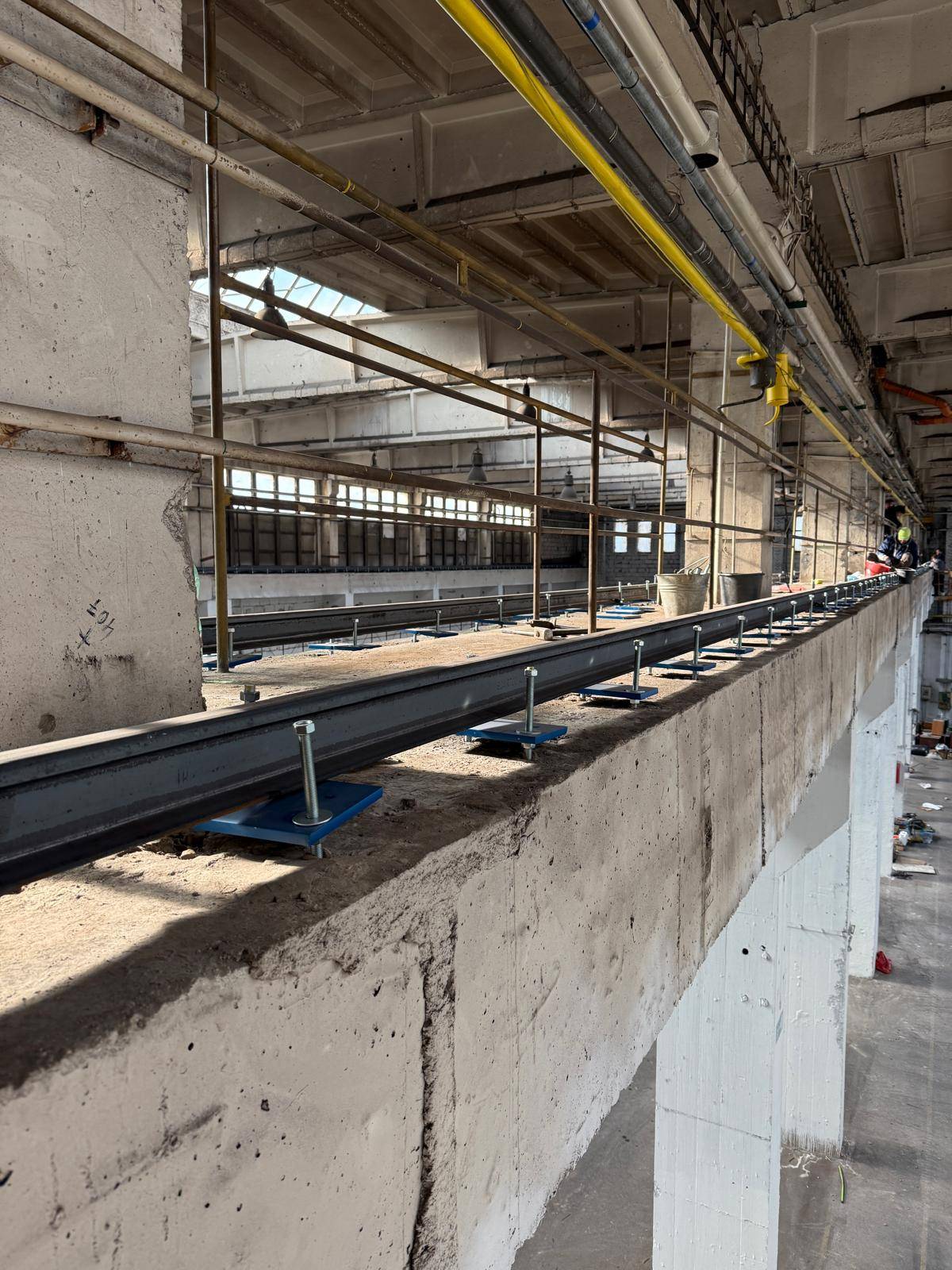
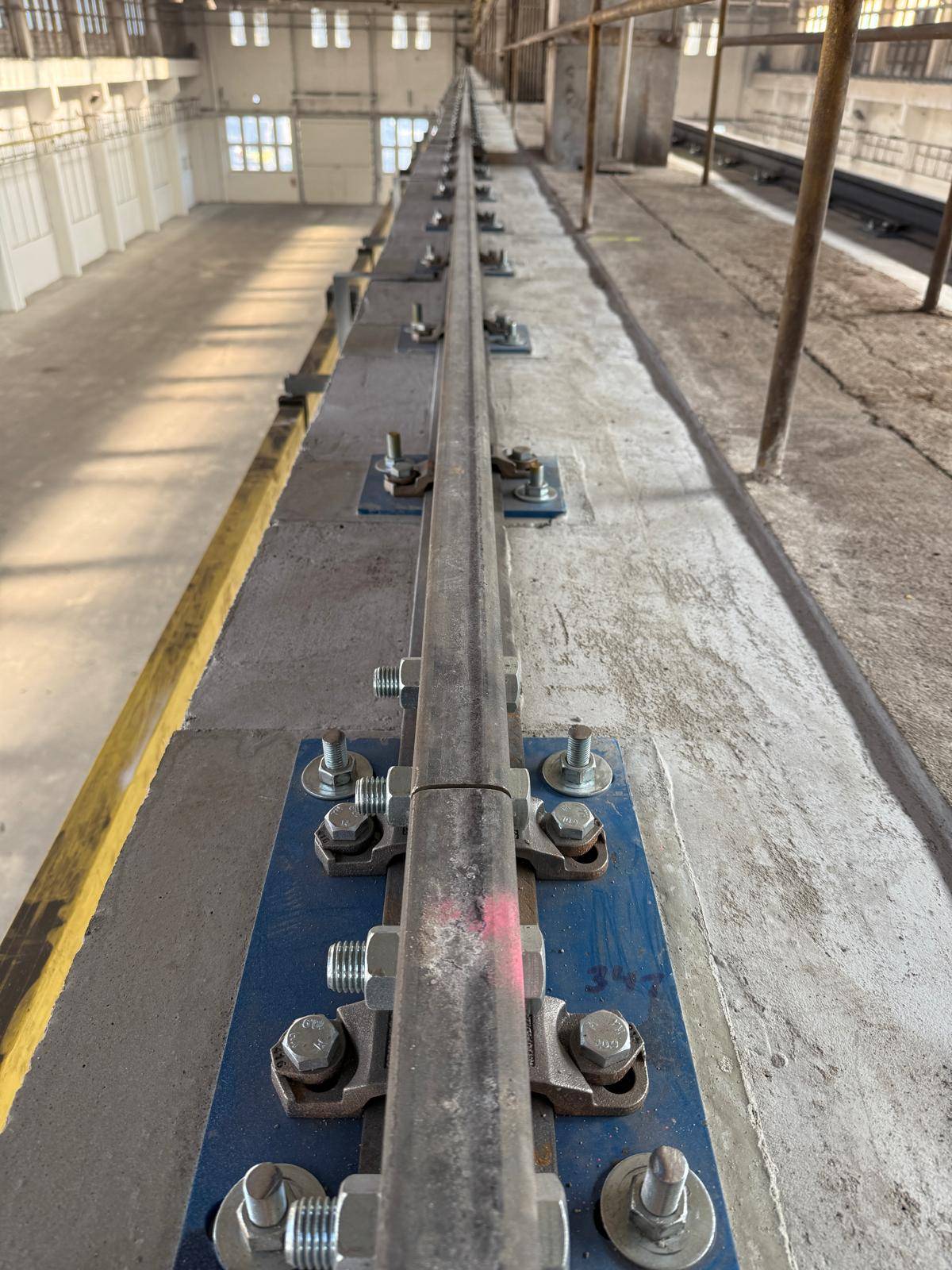
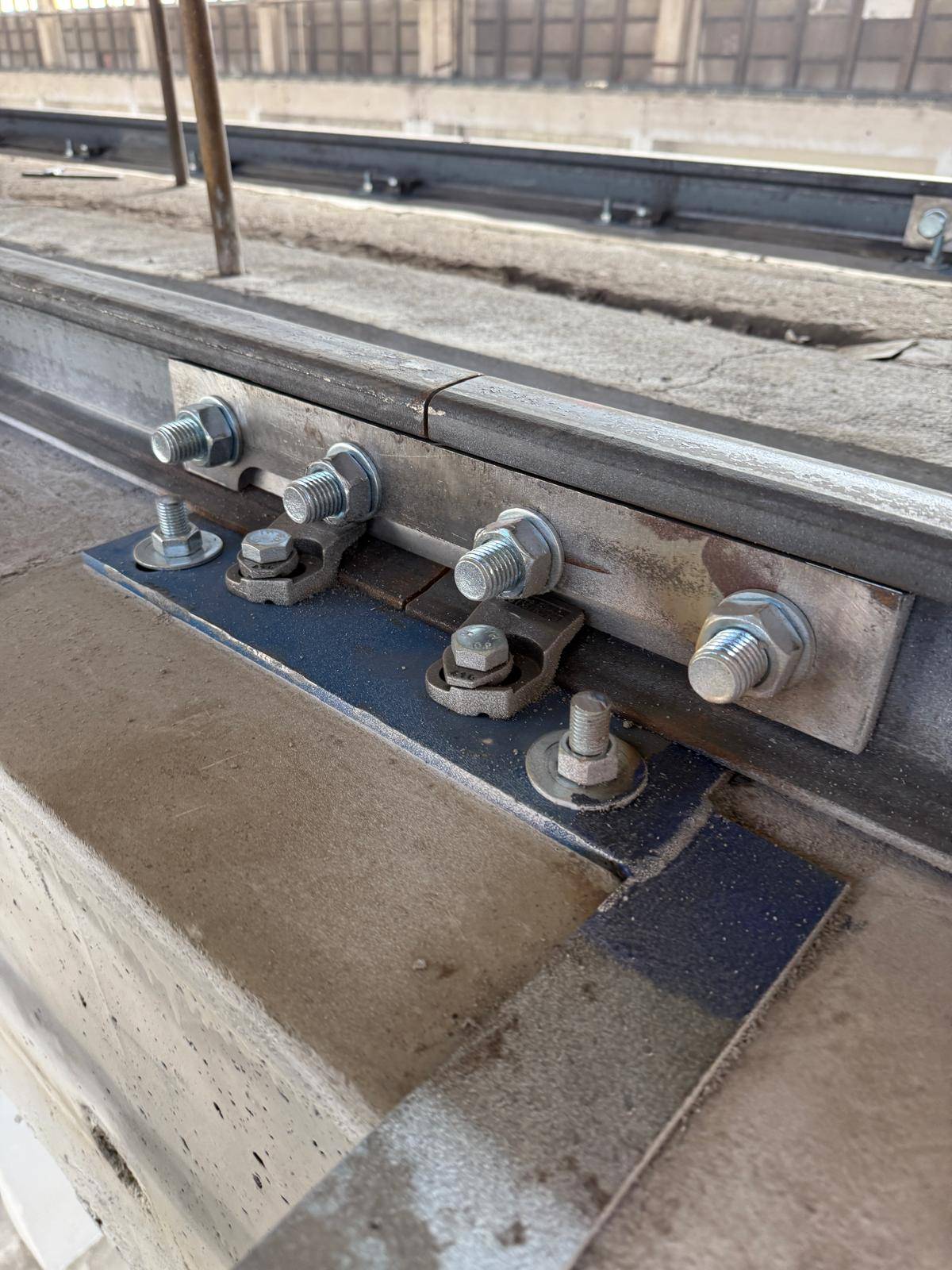
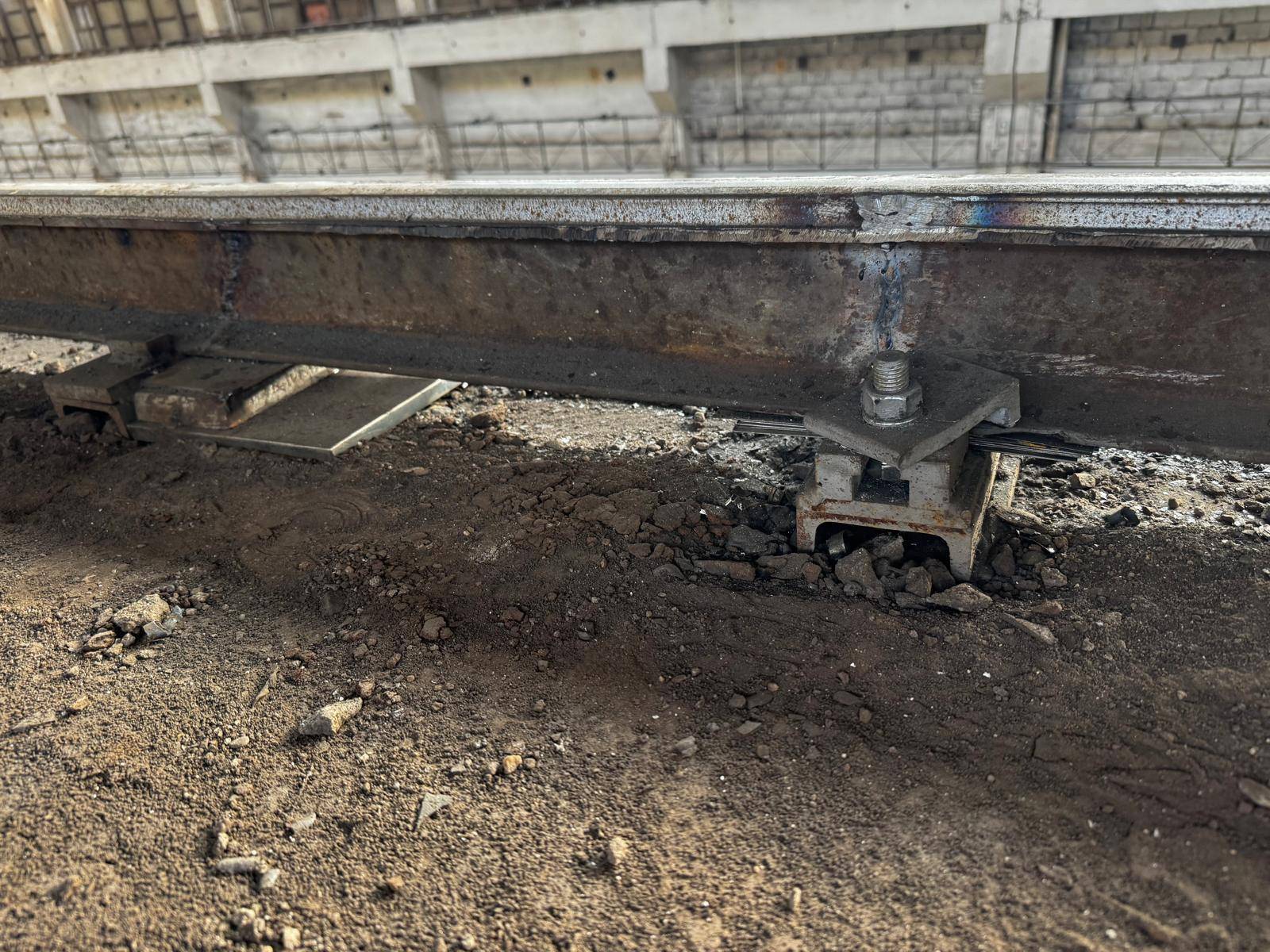
Crane rail alignment involves the vertical and horizontal adjustment of the runway to achieve the required geometric tolerances. The work may include the adjustment or replacement of rail pads, replacement of standard rail clips with adjustable rail clips, repair of anchoring systems, correction of unevenness, and, where necessary, grouting beneath the rail pads using a high-strength cementitious grout. The objective is to ensure precise rail alignment and smooth crane travel while minimizing impact loads on the supporting structure.
When repairing existing crane runways, it is essential to determine the appropriate scope of work. In some cases, localized realignment and replacement of selected components are sufficient, while in others a more comprehensive refurbishment is required, including the replacement of damaged runway girders, crane rails, or other structural components. Every repair is based on the actual operating loads, the crane's duty cycle, and the technical condition of the runway. This approach allows us to deliver a solution that is technically sound, safe, and proportionate to the actual condition of the installation.
Surveying and Long-Term Reliability
An important part of the process is a geodetic survey carried out by a licensed surveyor, followed by the issuance of a survey report. The survey accurately determines vertical and horizontal deviations, verifies the runway geometry after the repair, and documents that the installation complies with the required tolerances and specifications. This is particularly important in facilities where safety, precision, and long-term reliability are critical. The survey results also provide valuable baseline data for future maintenance, inspections, and planned modernization projects.
We plan all repair work with the customer's operations in mind. In production facilities and industrial environments, it is often essential to minimize downtime, develop a safe installation procedure, and ensure that the work is carried out with minimal disruption to production. Upon completion, the project may include final inspection, adjustment, and recommendations for ongoing maintenance to help prevent the recurrence of similar issues.
Inspection of Associated Crane System Components
Regular inspection of crane runways helps identify changes in geometry, rail wear, or loosening of anchoring components before they develop into more serious failures. This is particularly beneficial in facilities with intensive crane operation, higher lifting capacities, or frequent acceleration and braking cycles. A properly maintained crane runway contributes to safer operation, reduces stress on the crane travel mechanism, and helps lower long-term maintenance and repair costs.
During every intervention, we also consider the condition of the associated crane system components. If the issue is caused by worn travel mechanisms, crane wheels, brakes, or deficiencies in the supporting structure, these factors must be addressed together with the runway repair. In such cases, rail alignment alone may not be sufficient, and the underlying problem could reoccur over time if the root cause is not properly resolved.