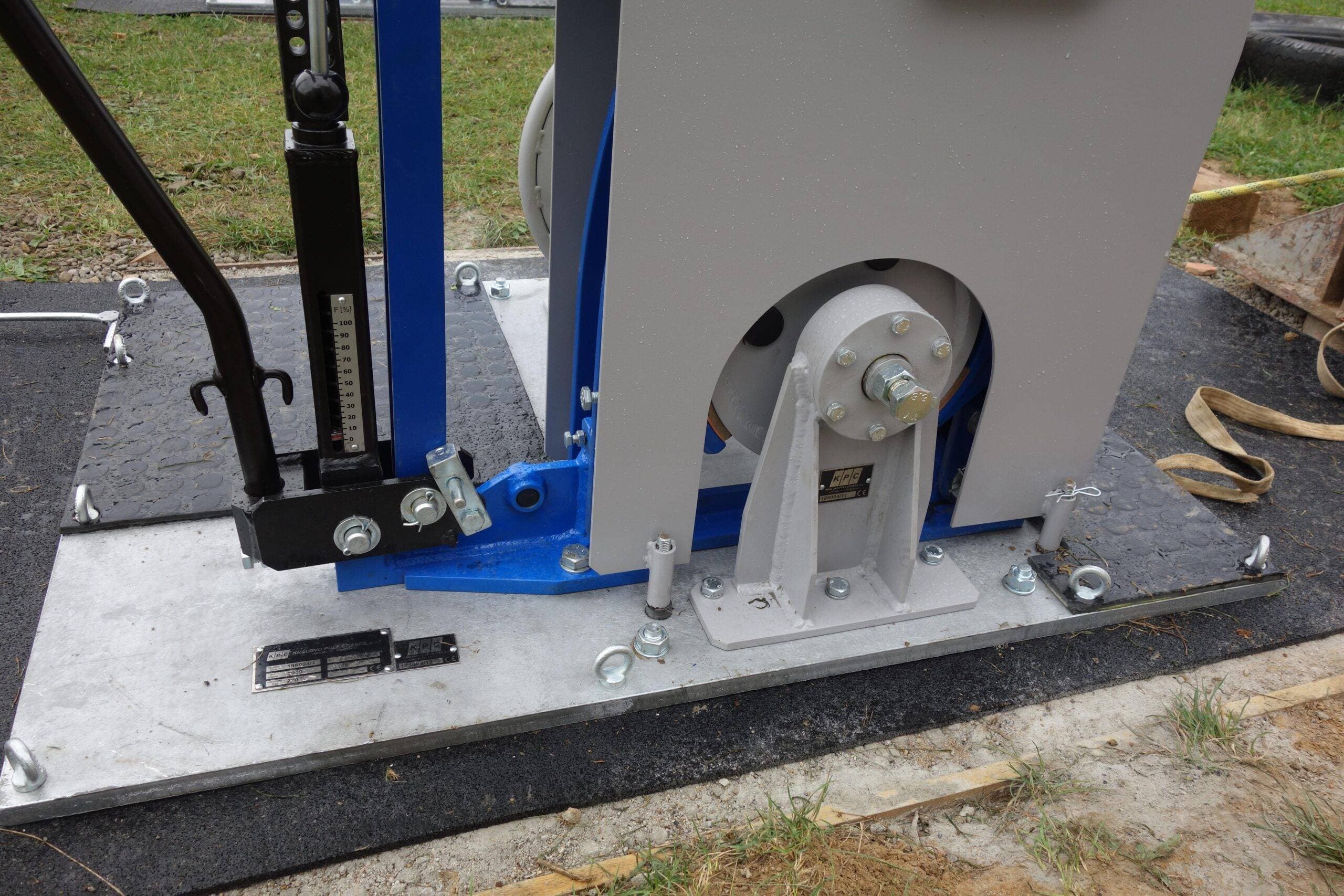
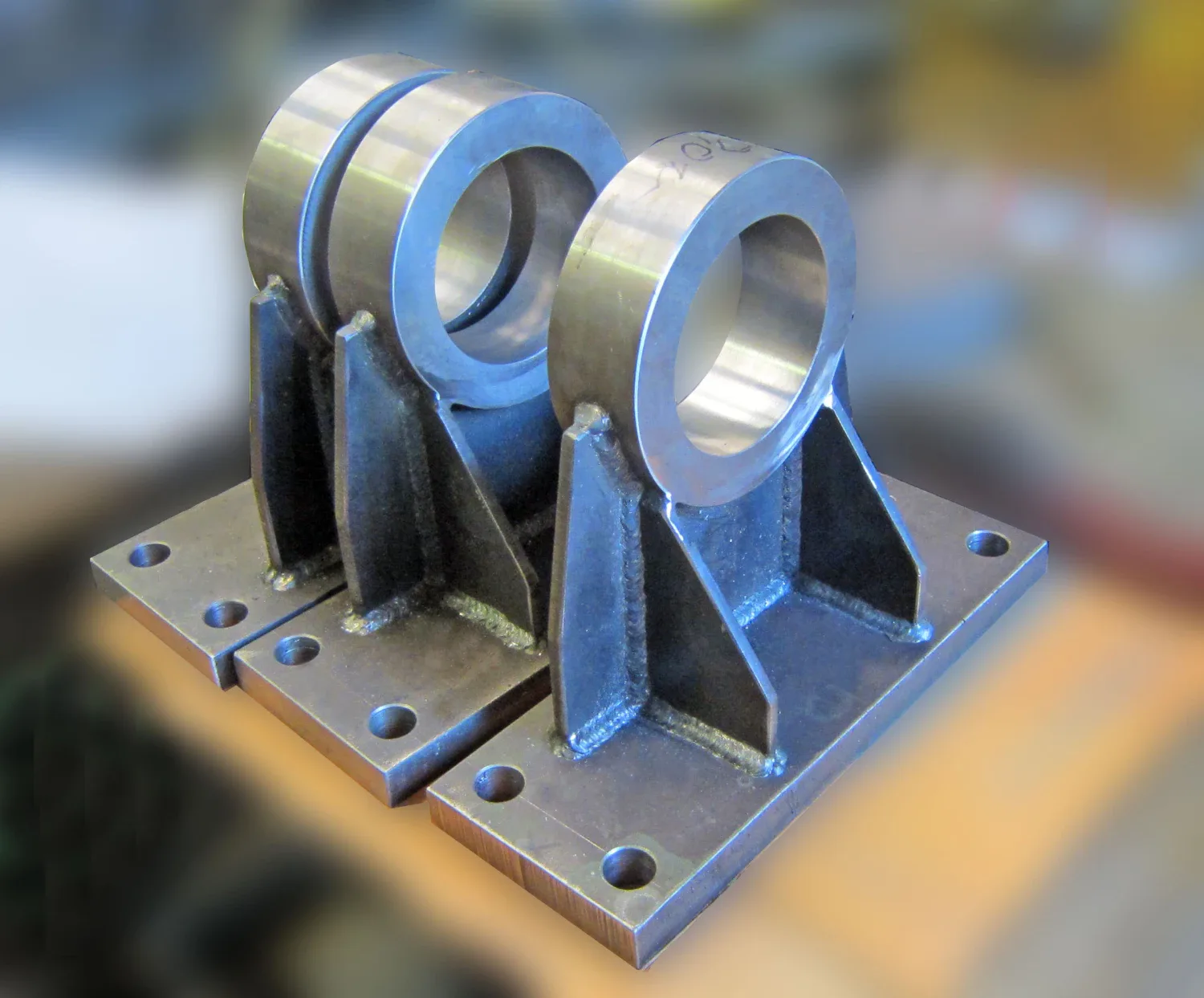
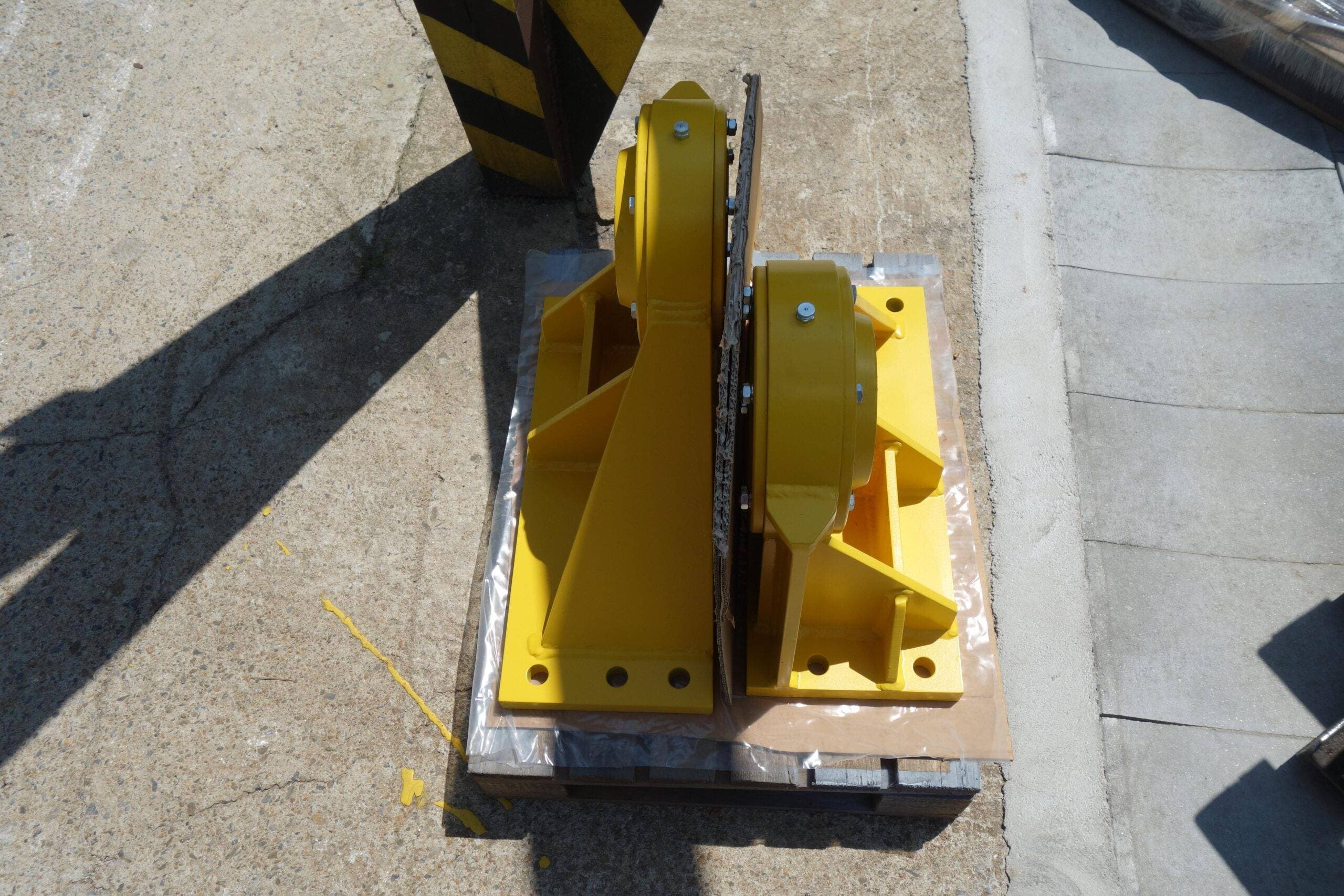
Standard drum bearings, manufactured as a casting or welded assembly, must reliably transmit the radial and axial loads generated during rope winding, startups, braking, and changes in direction of movement. They are important for the correct guidance of the rope drum and stable operation of the lifting mechanism during normal and more demanding use.
The selection of bearing type, size, and mounting method is based on the drum diameter and length, load capacity, operating mode, required lifespan, and maintenance possibilities. During the design process, we also address lubrication, sealing, bearing housing fixation, and the connection to the trolley structure. A correctly chosen standard drum bearing helps reduce wear, maintain smooth lifting operation, and minimise the risk of unplanned servicing.
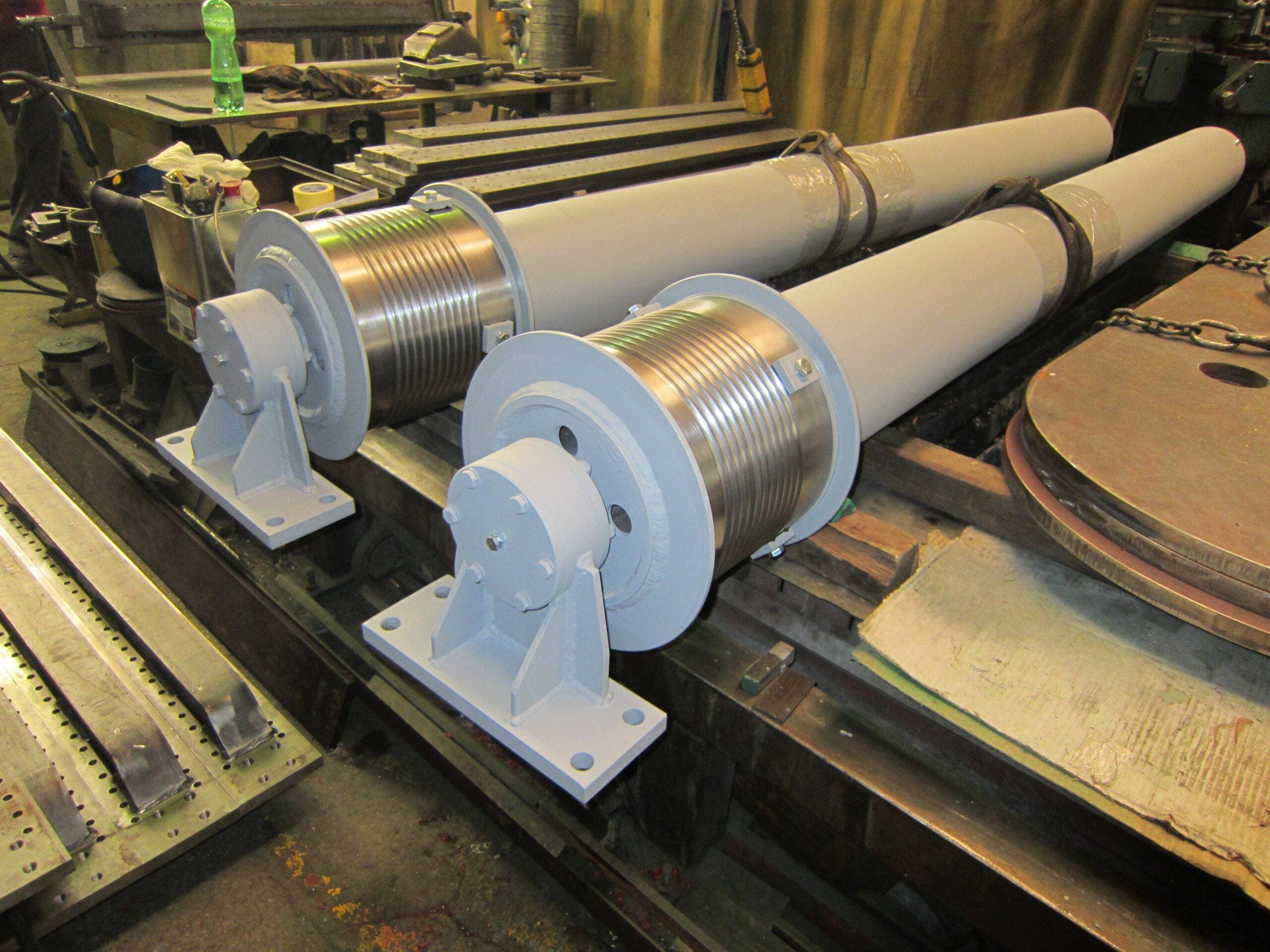
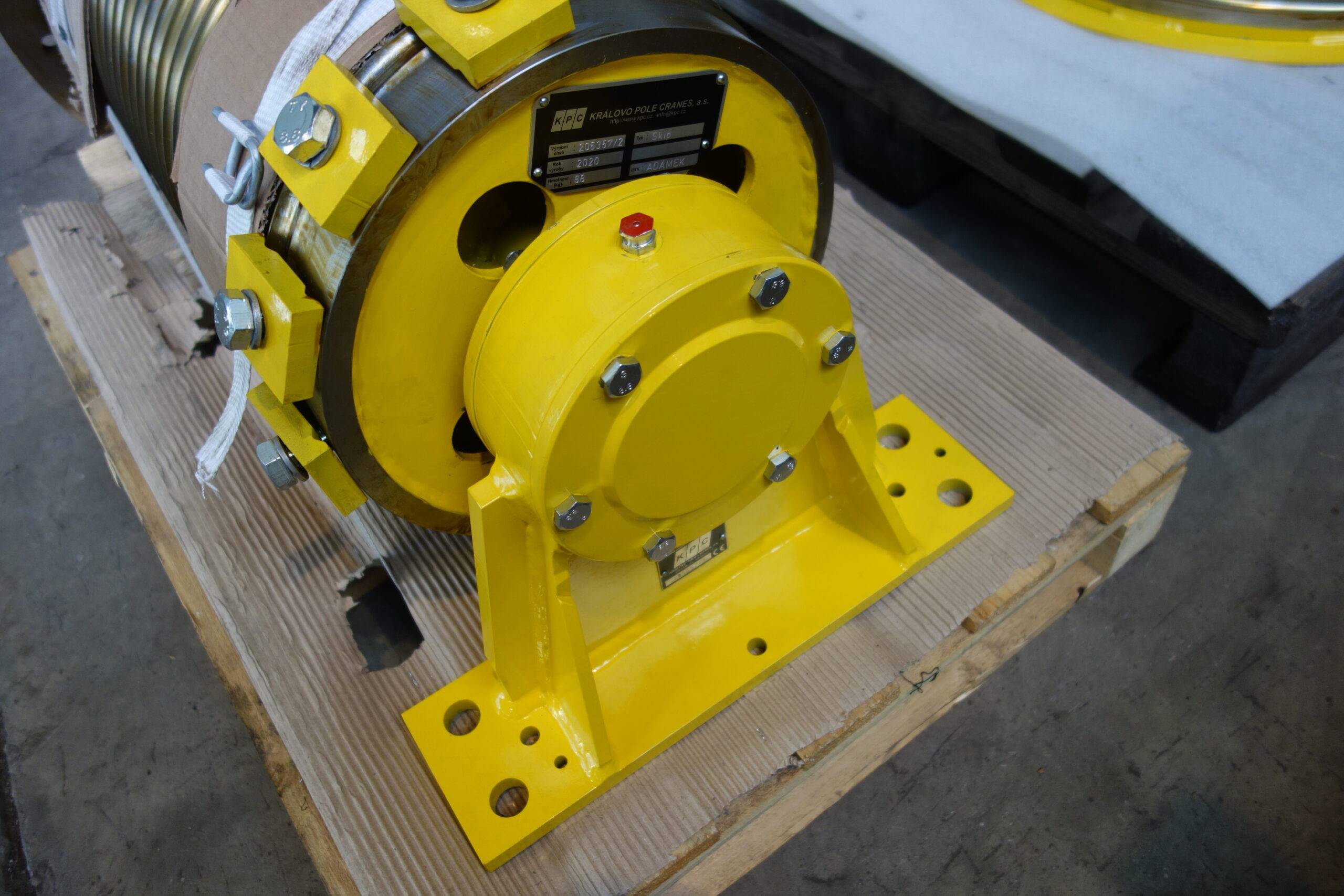
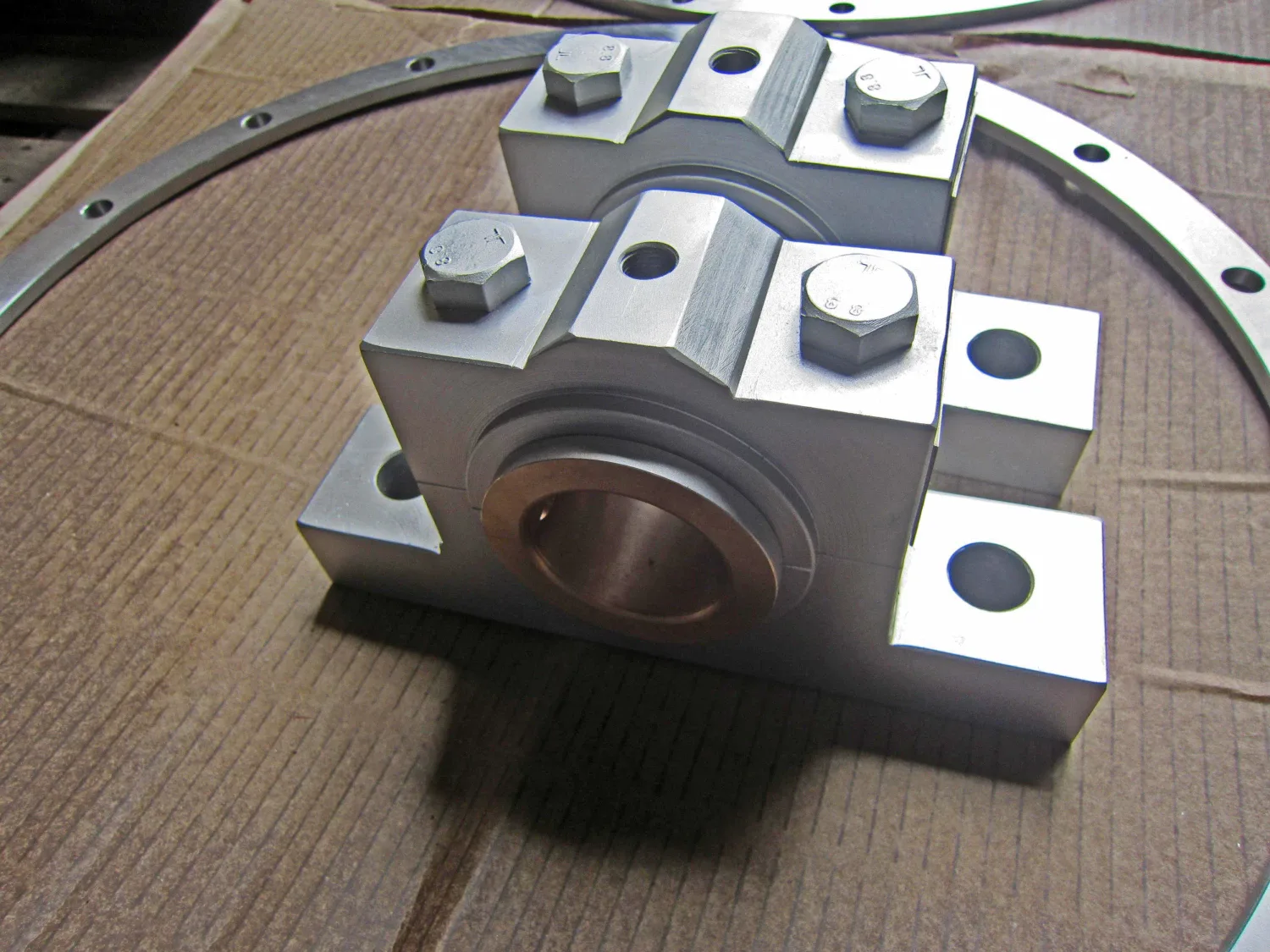
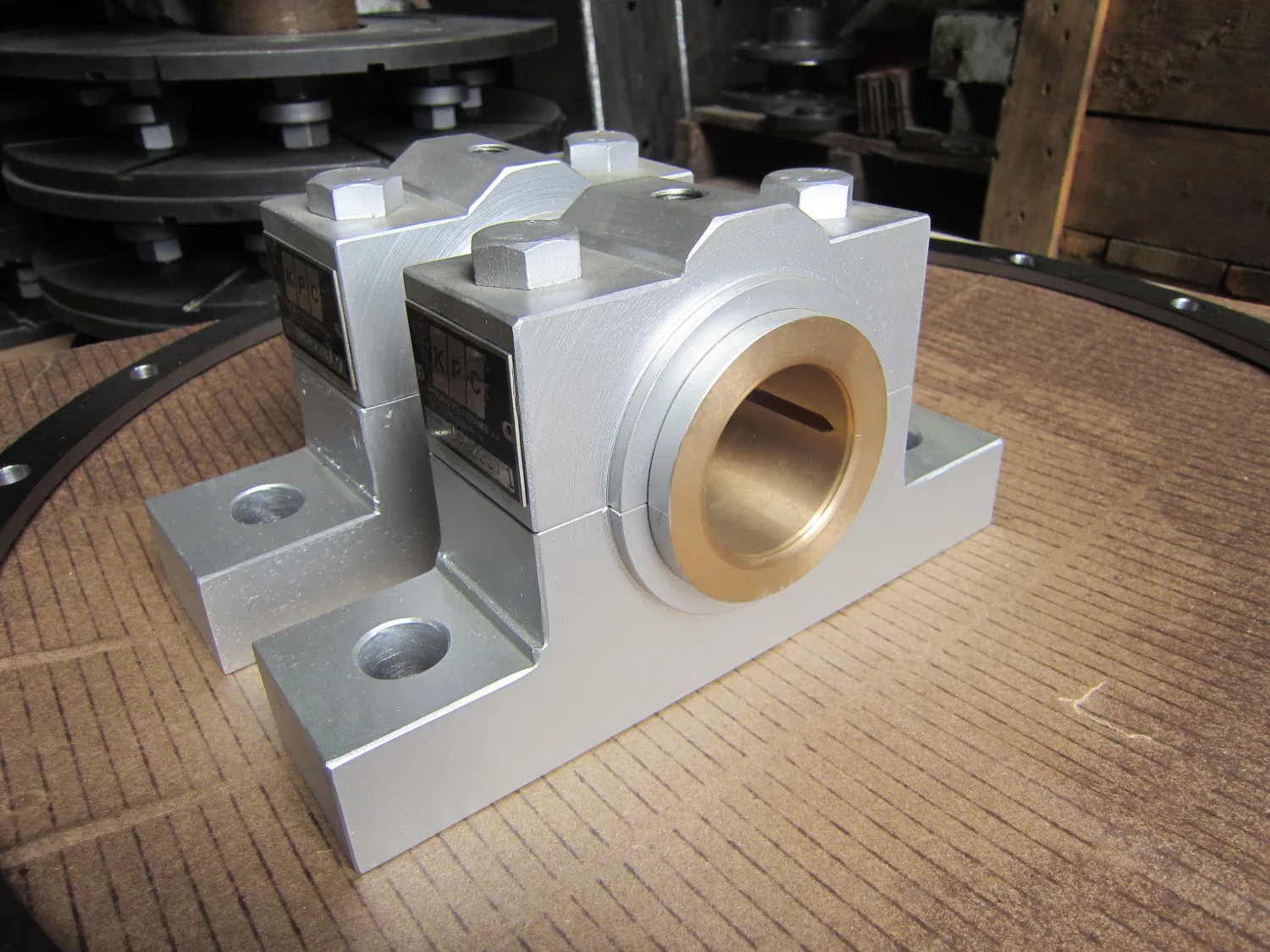
Split drum bearings are used where a reliable mounting for the hoisting drum is required, along with easy access for assembly, inspection, or maintenance. The bearing housing is designed to be split, allowing the upper cover to be removed for bearing inspection without needing to dismantle the entire housing or make extensive structural alterations.
This design significantly reduces downtime during lifting equipment servicing and is also practical for replacing the entire rope drum. Split drum bearings are particularly suitable for operations where quick service accessibility, minimising downtime, and the possibility of regular inspection of stressed parts are important. During the design phase, we consider load, space for lid removal, lubrication methods, and safe access for maintenance personnel.
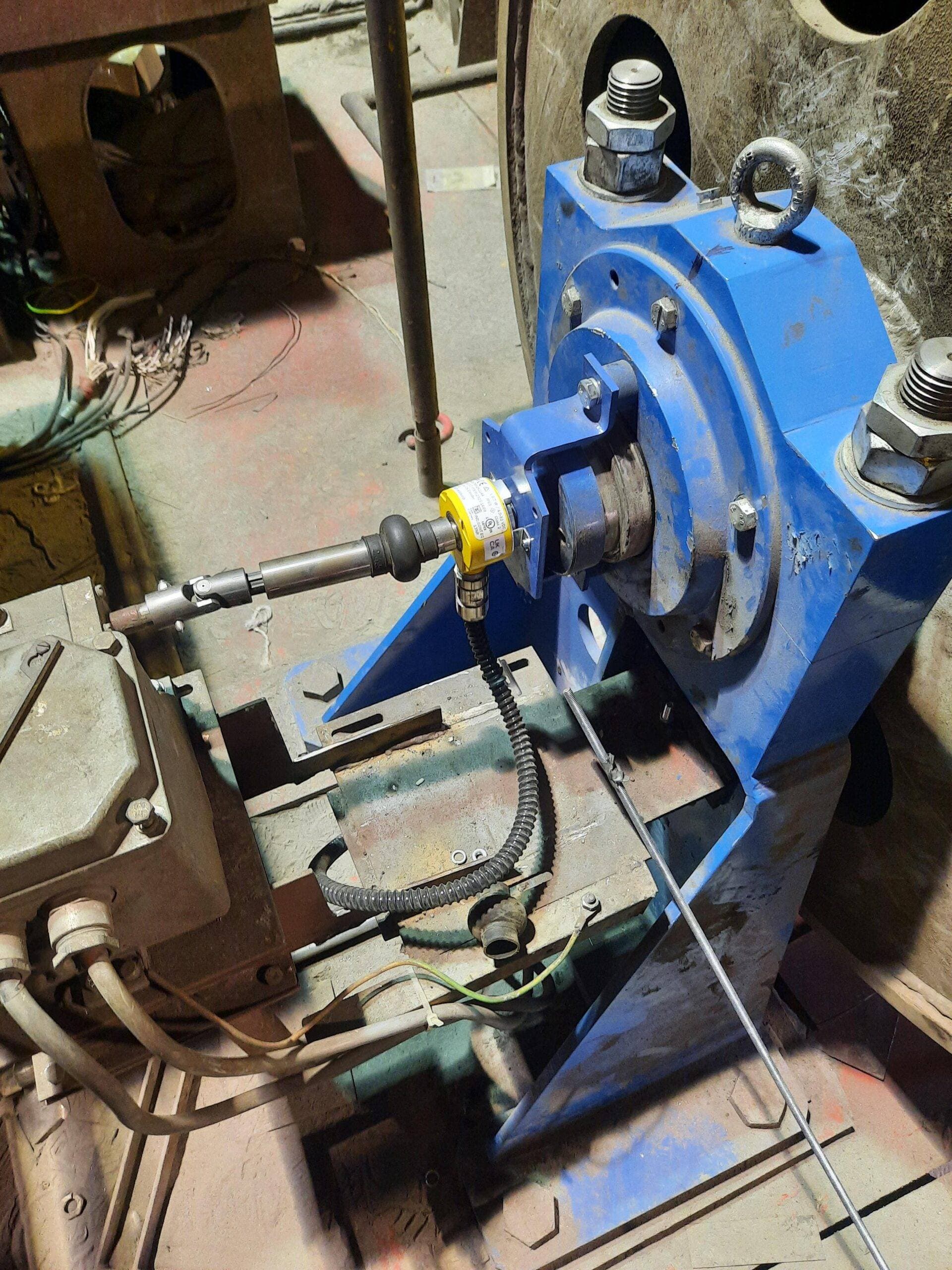
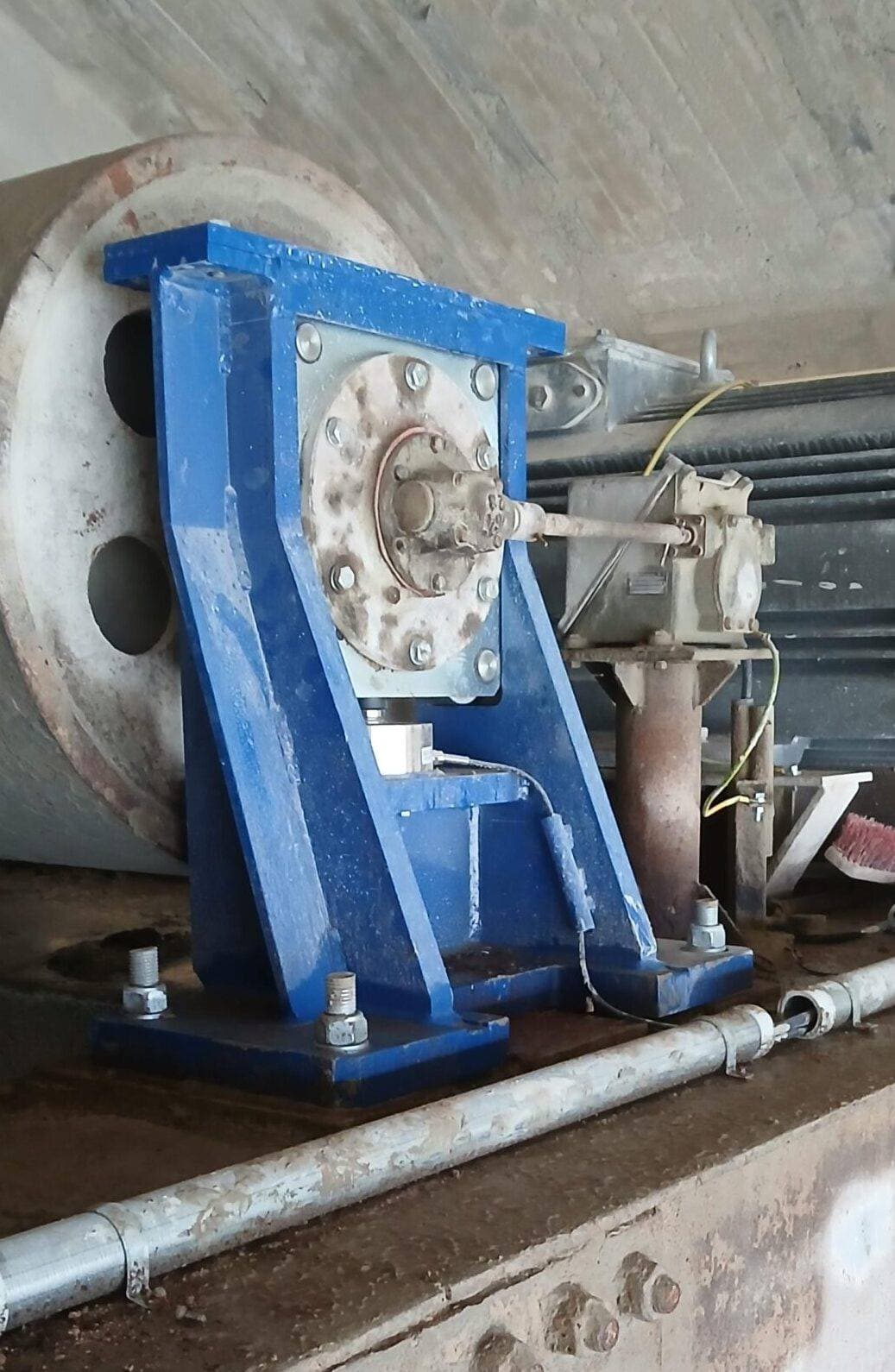
Weighing drum bearings combine the function of supporting the wire rope drum with the measurement of the load on the lifting device. The bearing unit is supplemented with an integrated force sensor, which evaluates the reactions from the drum and allows the actual weight of the suspended load to be indirectly determined.
The system provides continuous information on load, and can be used for displaying weight to the operator, overload protection, and recording operational data. Drum load cells are suitable where there is a need for better control of lifting loads, increased handling safety, and a more accurate overview of equipment operation. During the design phase, we address measurement accuracy, sensor placement, cable protection, integration with the control system, and the possibilities for subsequent calibration.