Column cranes for local handling
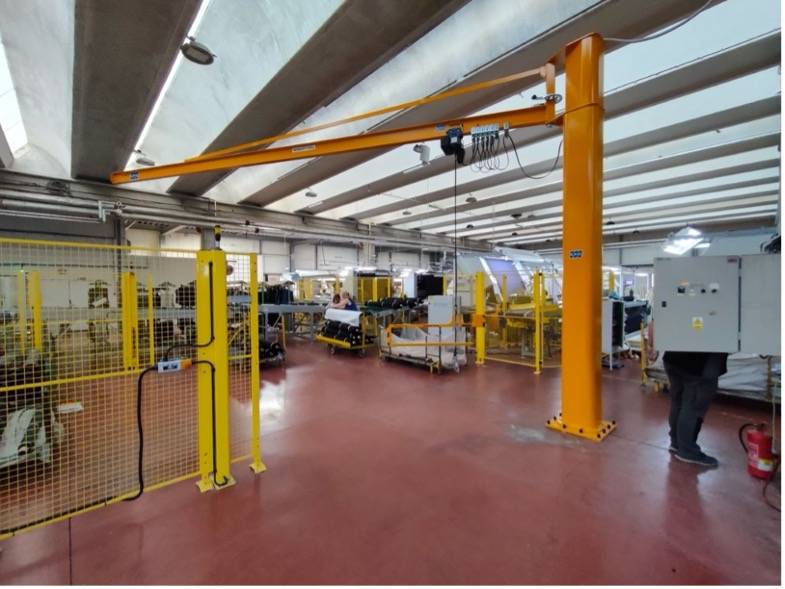
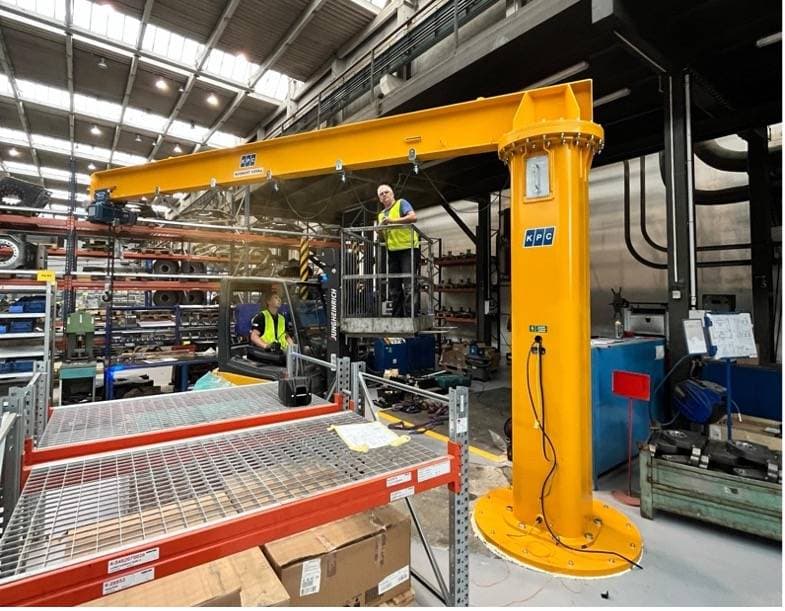
Jib cranes are suitable for local load handling in manufacturing, warehouses, assembly plants, service workshops, and at individual machines. They are used where there is no need to service the entire hall, but rather a specific workstation, line, or handling zone. Thanks to their self-supporting column construction, they can operate independently of the building's structural framework and often represent a practical solution to supplement existing crane equipment.
Each pillar jib crane is designed according to the required load capacity, arm reach, rotation angle, lifting height, load type, and intended use in operation. It is also important to assess the floor, anchoring, manoeuvring space, and the safe movement of the operator around the equipment. A correctly designed solution helps to speed up work, reduce the physical demands of handling, and increase safety during daily operation.
Bespoke console and slewing cranes
In addition to classic column designs, we also supply cantilever and slewing cranes tailor-made for specific workplaces. A cantilever crane can be anchored to a wall, a hall column, or another suitable supporting structure, provided the technical conditions of the building permit it. The slewing design is used where it's necessary to conveniently transfer loads within a certain working radius without the need to install an extensive travel path.
The choice between column, cantilever, or other rotating solutions depends on spatial possibilities, load capacity, frequency of use, and interconnectivity with other technologies. For each design, we assess whether the equipment will be used for simple lifting, precise positioning, loading parts into a machine, assembly work, or material handling between multiple workstations. Based on this, we select the structure, hoist, operating method, and any gripping tools.
Construction, operation, and safe use
Column cranes can be equipped with an electric or manual hoist, a trolley along the boom, a pendant controller, remote control, or other features depending on the nature of the operation. The solution can also include hooks, beams, grabs, jigs, or special gripping devices for specific types of loads. For smaller workstations, it is important that the equipment is simple to operate, clear, and does not impede the usual movement of the operators.
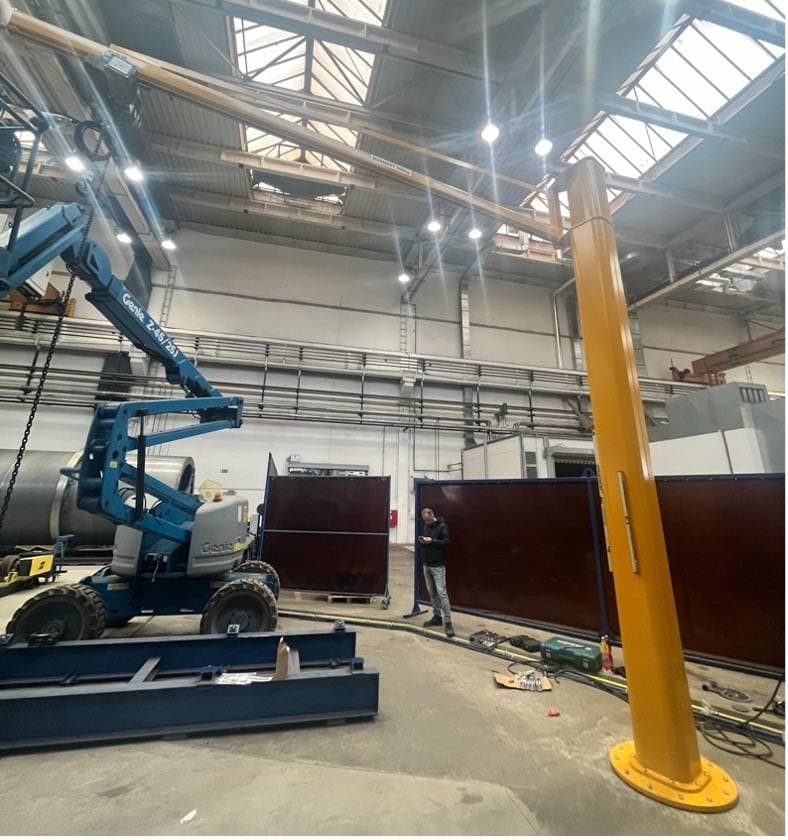
Safety is primarily influenced by correct anchoring, column stability, jib load capacity, the quality of the lifting equipment, and adherence to the working space. Therefore, during the design phase, we address not only the crane itself but also the surrounding operations, obstacles, jib reach, potential collisions, and installation conditions. If the equipment is installed into an existing hall, it is advisable to also verify the load-bearing capacity of the floor or the supporting structure to which the cantilever solution is to be attached.
Job-based proposal
When using pillar cranes, it's important to correctly determine where the equipment should be positioned and what area it needs to serve. In practice, this could be a workstation at a machine, an assembly table, a storage area, a service point, or a section of a production line where parts are repeatedly handled. If the working area is poorly designed, the crane might be an obstruction, have insufficient reach, or conversely, unnecessarily occupy space that could be used more effectively.
When designing, we therefore address not only technical parameters, but also the normal movement of workers, access to materials, storage areas, and flow for further handling. A good design of a jib crane can simplify work in a specific workplace, reduce the manual carrying of heavy parts, and lower the risk of material damage during handling.
Delivery, assembly and long-term use
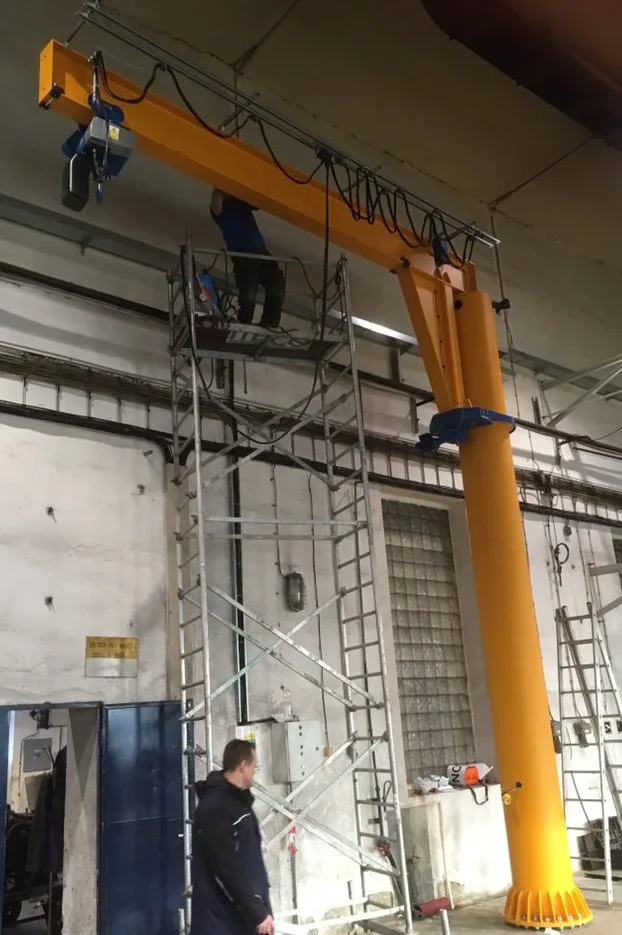
The supply of a column jib crane can include technical design, manufacturing, assembly, commissioning, documentation, and subsequent servicing. We handle new equipment as well as modifications to existing solutions, for example, changes to load capacity, hoist replacement, control system additions, or adaptation of equipment for a new type of handling. The aim is to deliver a reliable solution that meets actual operational needs.
Column cranes are particularly suitable where it is necessary to increase the efficiency of a specific workplace without complex construction preparations or interventions in the entire hall. If you are dealing with local handling in production, warehousing, assembly, or at a machine, we will prepare a design according to the space, load, frequency of use, and the desired method of operation.
The assessment may also include recommendations for suitable maintenance and inspection intervals. Regular inspection of the anchoring, arm, lifting equipment, and controls helps maintain safe operation and detect wear in good time, which could cause a breakdown or shutdown of the workstation during production in the future.