Underslung cranes for halls with limited height
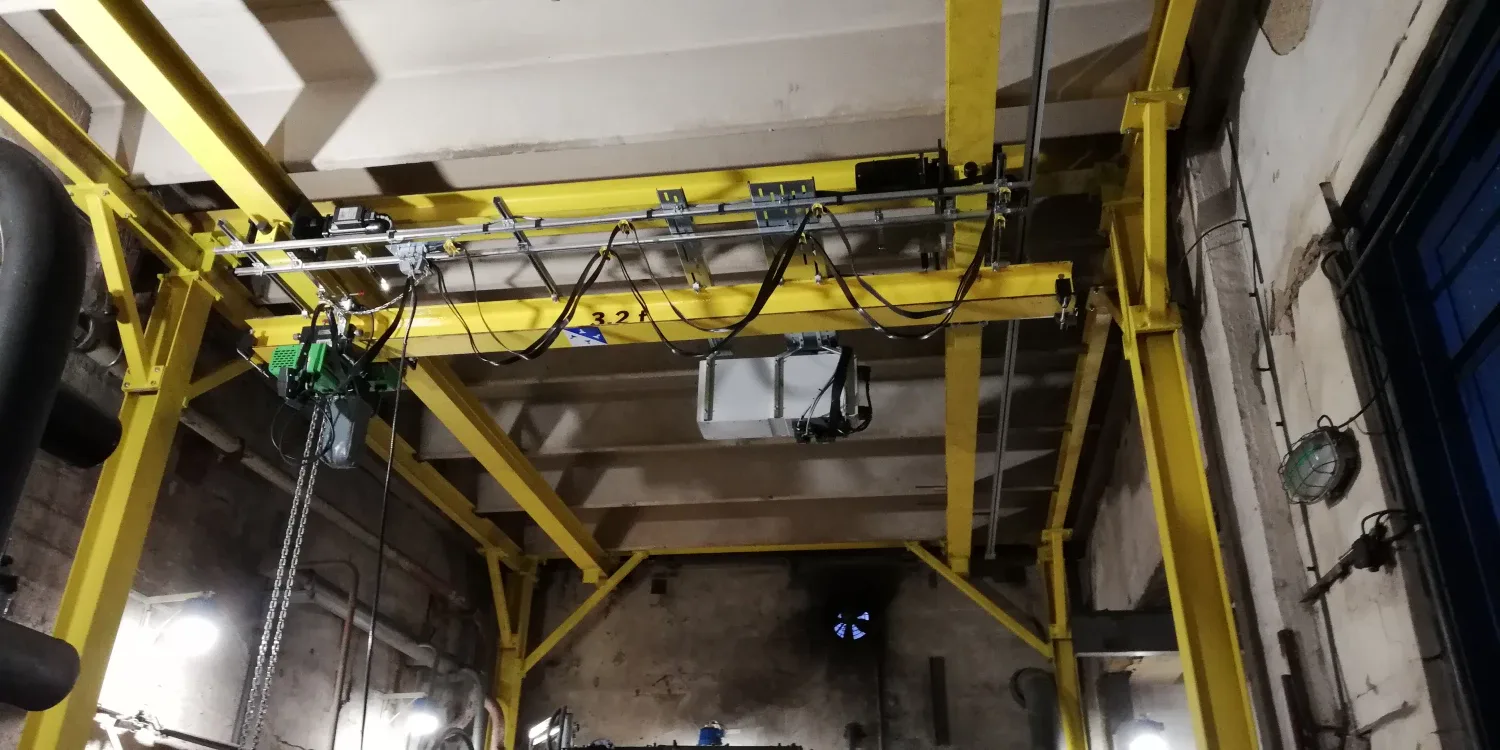
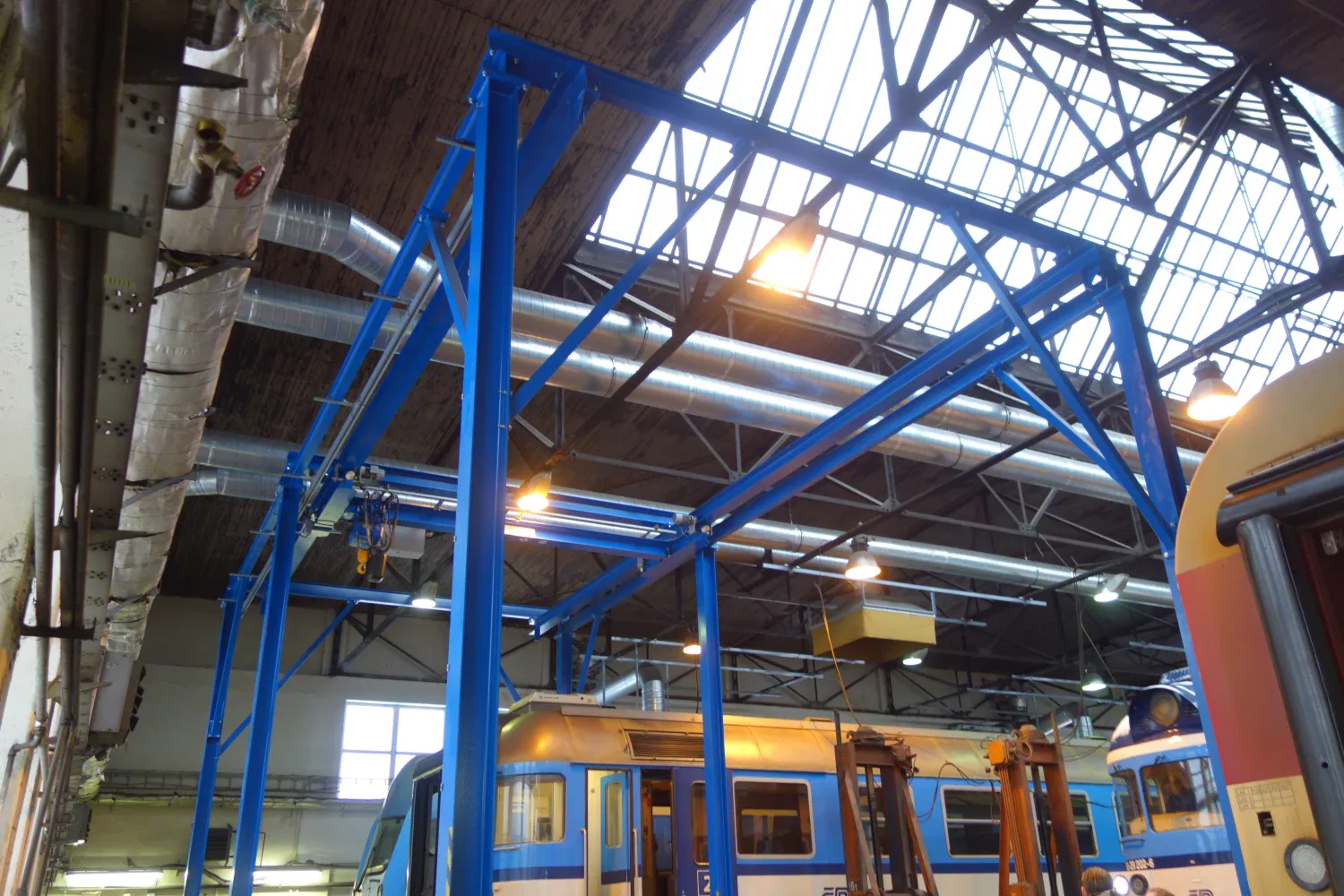
Underslung cranes are particularly suitable where it is essential to maximize the available headroom while maintaining unobstructed space below the crane runway. Their design is based on girders suspended from the lower flanges of the crane runway, along which the main girder carrying the hoist trolley and hook travels. This configuration enables efficient coverage of the working area, even in buildings where a conventional overhead bridge crane would not be the most space-efficient or structurally suitable solution.
This type of crane is commonly used in light and medium-duty industrial applications, warehouses, assembly lines, maintenance facilities, and production halls with limited headroom. Underslung cranes improve material handling in environments where smooth load movement, efficient use of available space, and seamless integration with the customer's specific production process are essential.
Designed to suit the building layout and material handling requirements
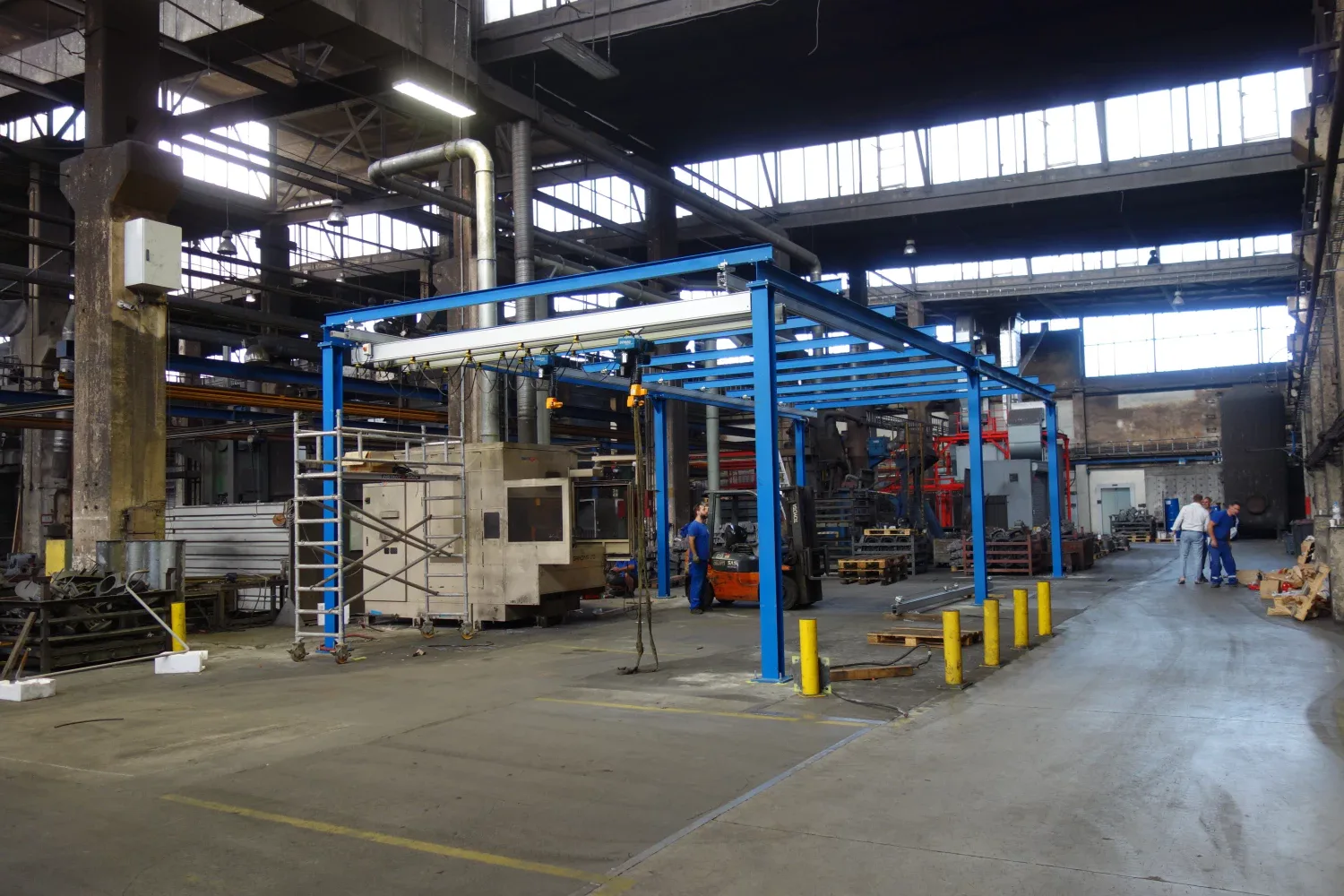
Each underslung crane is designed to match the building layout, required lifting capacity, working area, and load-handling requirements. Key design considerations include the runway length, span, lifting height, duty cycle, hoist type, control method, and integration with the surrounding operation. A properly engineered solution ensures that the crane does not obstruct the workspace, provides sufficient coverage, and enables safe and efficient load handling throughout the required operating area.
An underslung crane system can be an ideal solution for a standalone workstation, a section of a production line, or a warehouse area where materials need to be transferred between multiple locations. In practice, the design often includes integration with the existing building structure, verification of the structural load capacity, and consideration of installation access and future maintenance requirements. When the crane is installed in an existing facility, it is essential to assess the actual condition of the supporting structure and verify its ability to safely withstand the intended loads.
Hoist Trolley, Hook, and Load-Handling Attachments
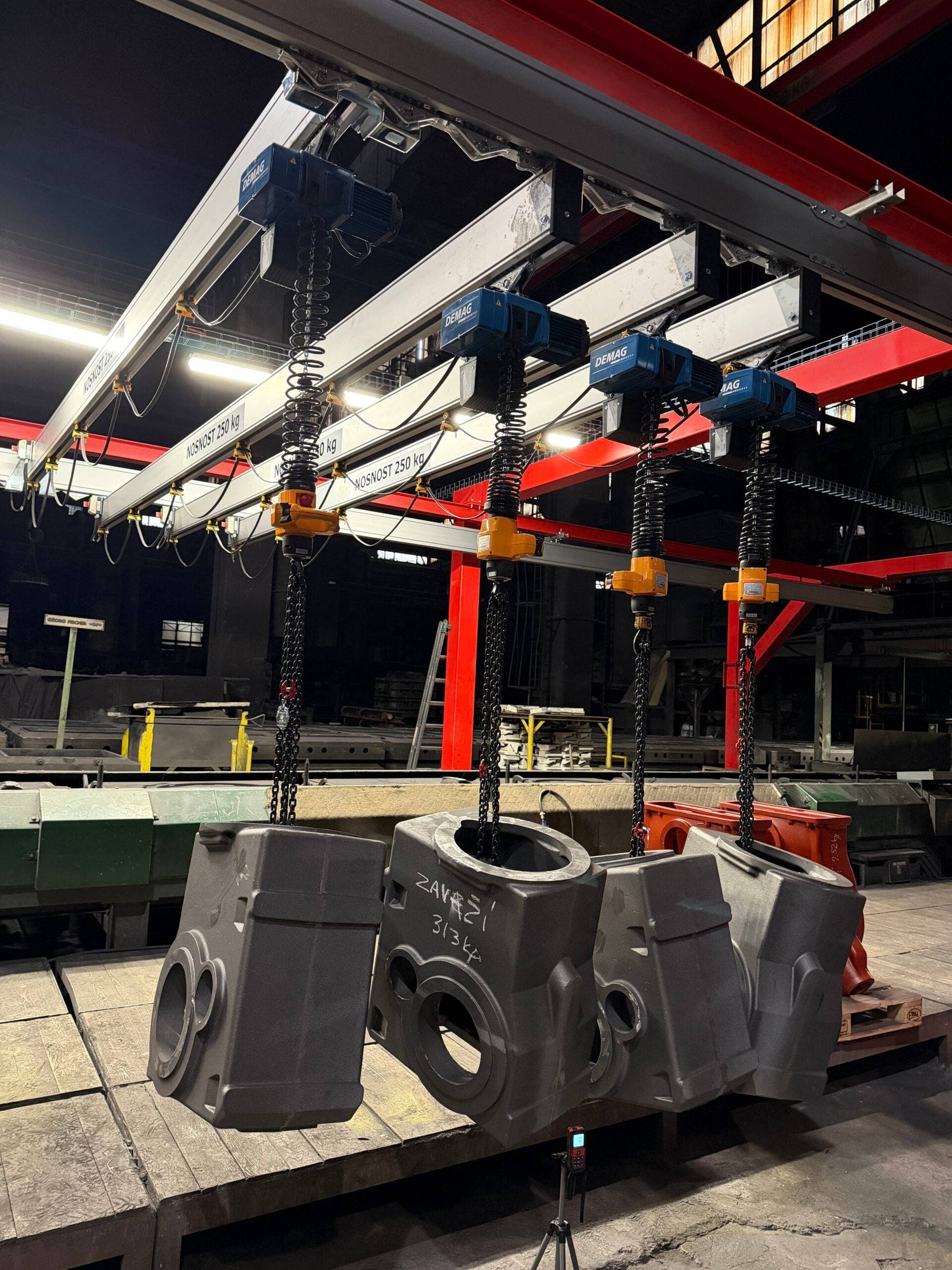
The hoist trolley travels along the underslung girder and is equipped with a hook that can accommodate a wide range of load-handling attachments, depending on the type of load being lifted. These may include lifting beams, clamps, hooks, custom lifting fixtures, or other devices designed to ensure safe gripping and precise material handling. The choice of load-handling attachment always depends on the weight, shape, center of gravity, and the required method of handling the load.
The underslung crane can be operated using either a pendant control or a wireless remote control, depending on the operational requirements. In light- and medium-duty applications, it is essential that the operator maintains precise control over load movement and can handle the load safely, even in confined spaces. For this reason, the crane design may also include optimized travel and lifting speeds, end stops, and additional safety features to ensure safe and efficient operation.
Maintenance, Operation, and Long-Term Reliability
When designing an underslung crane system, future maintenance requirements and access to individual components should also be taken into account. The hoist, travel trolleys, electrical power supply, suspension components, and supporting structure must be designed to allow routine inspections and maintenance without unnecessary disassembly. This is particularly important in facilities where the crane is used on a daily basis and any downtime could disrupt production or shipping operations.
Another advantage of an underslung crane system is its ability to be tailored to the specific layout of the workplace. The runway can be designed to serve a straight material handling route, multiple interconnected workstations, or areas where the full width of the building needs to be utilized without major structural modifications. A properly designed underslung crane helps reduce material handling time, minimize manual lifting, and improve operator ergonomics.
Custom Underslung Cranes with Professional Installation
The supply of an underslung crane can include engineering design, manufacturing, installation, commissioning, documentation, inspections, and ongoing maintenance services. We provide both new crane systems and modifications to existing installations, including increasing lifting capacity, extending the runway, replacing the hoist, upgrading the control system, or adapting the crane to new material handling requirements.
Our goal is to deliver a solution that meets the actual operating conditions while ensuring long-term safety, reliability, and ease of maintenance. If you require an underslung crane for light- or medium-duty applications, we will design a system tailored to your available space, load requirements, handling process, and integration with the technology and workflow in your facility.
For every project, we assess not only the required lifting capacity but also the crane's duty cycle and operating conditions. Occasional handling of lightweight components requires a different design approach than continuous operation in a production environment, where greater precision, speed, and reliability are essential. This allows us to select the most suitable components and minimize unnecessary wear. Our recommendations may also include appropriate inspection intervals and routine maintenance procedures based on the intensity of crane usage.