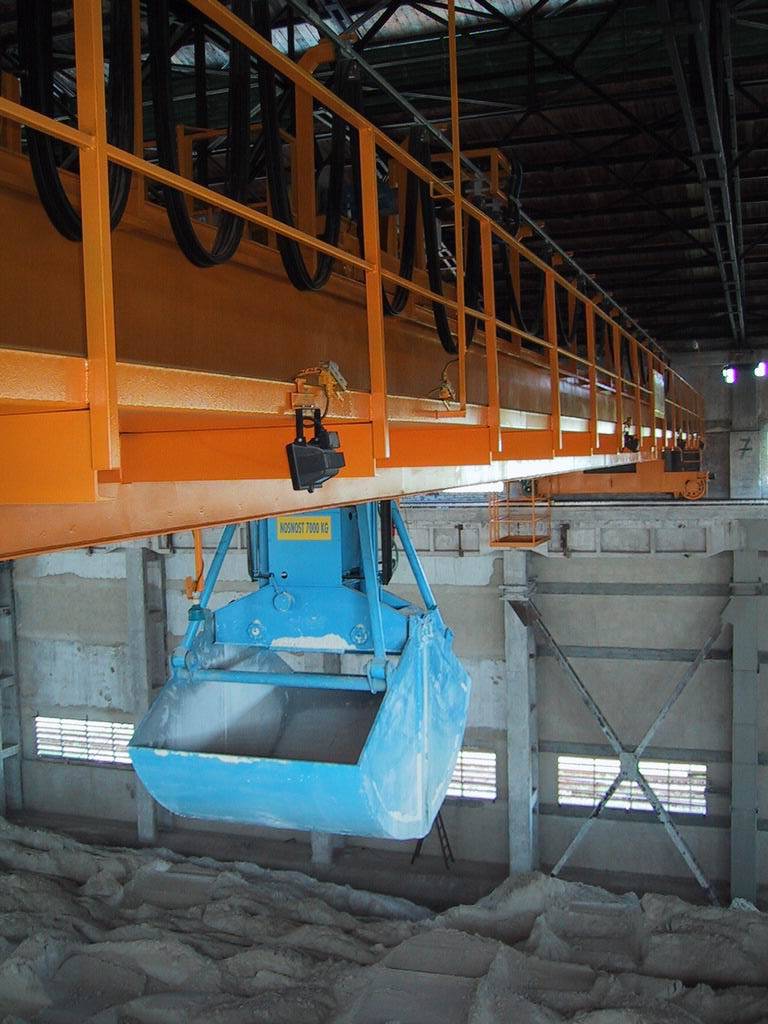
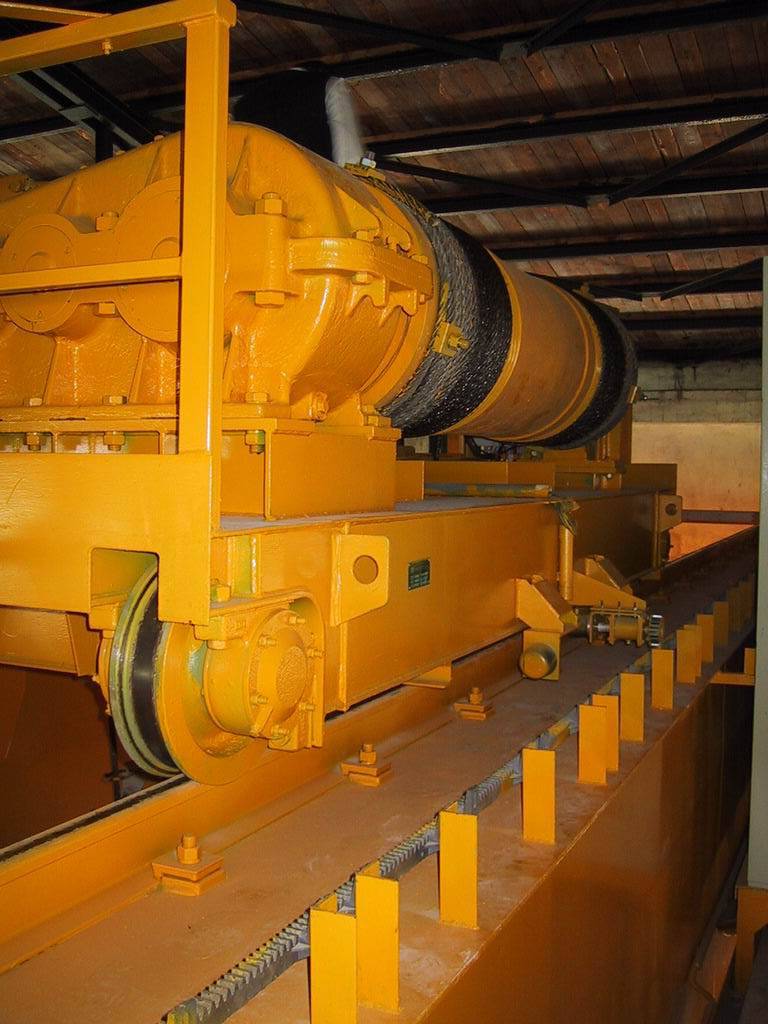
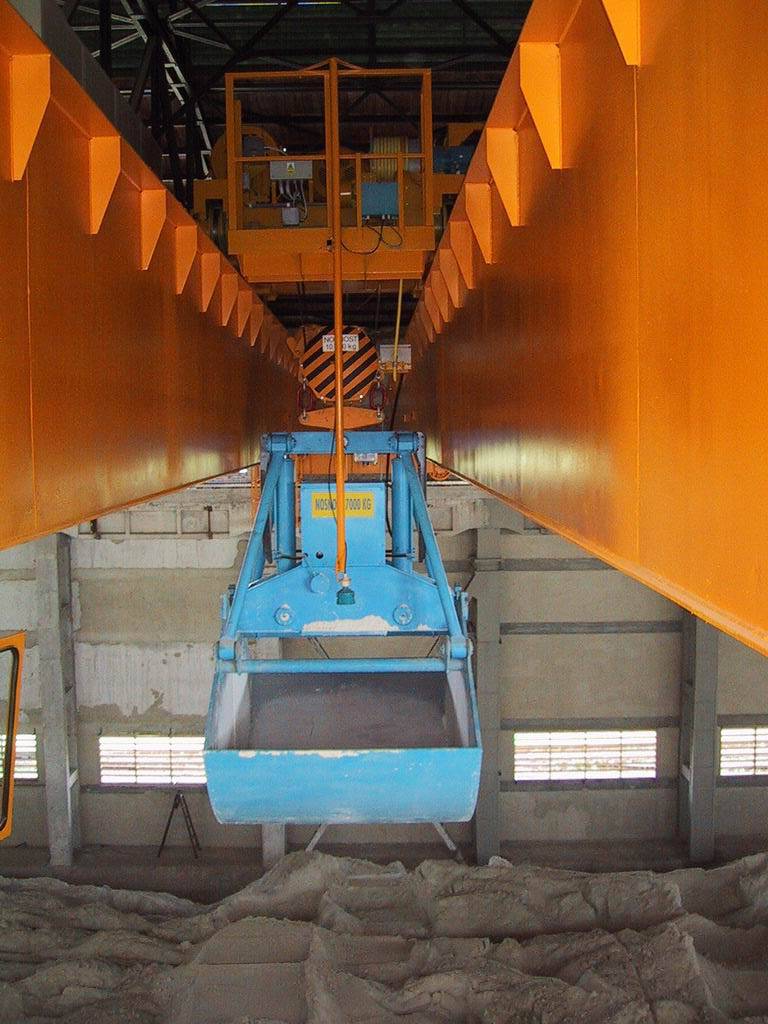
As part of this project, we designed, manufactured and delivered a fully automated overhead gantry crane for handling loose gypsum in an enclosed storage hall. The equipment is a highly sophisticated system that combines classical crane technology with modern industrial process control and automation.
The delivery included the preparation of complete design, construction and production documentation, manufacture and assembly of the crane and main trolley, recovery and testing of the control system and commissioning of the equipment.
The crane is designed for both automatic and manual operation. In automatic mode, it is controlled from the control room via a control system that provides fully autonomous material handling, including filling of the stockpile, filling of hoppers during dispatch and approaching material during off-loading. All crane movements - lift, cat travel and bridge travel - are continuously controlled by frequency converters.
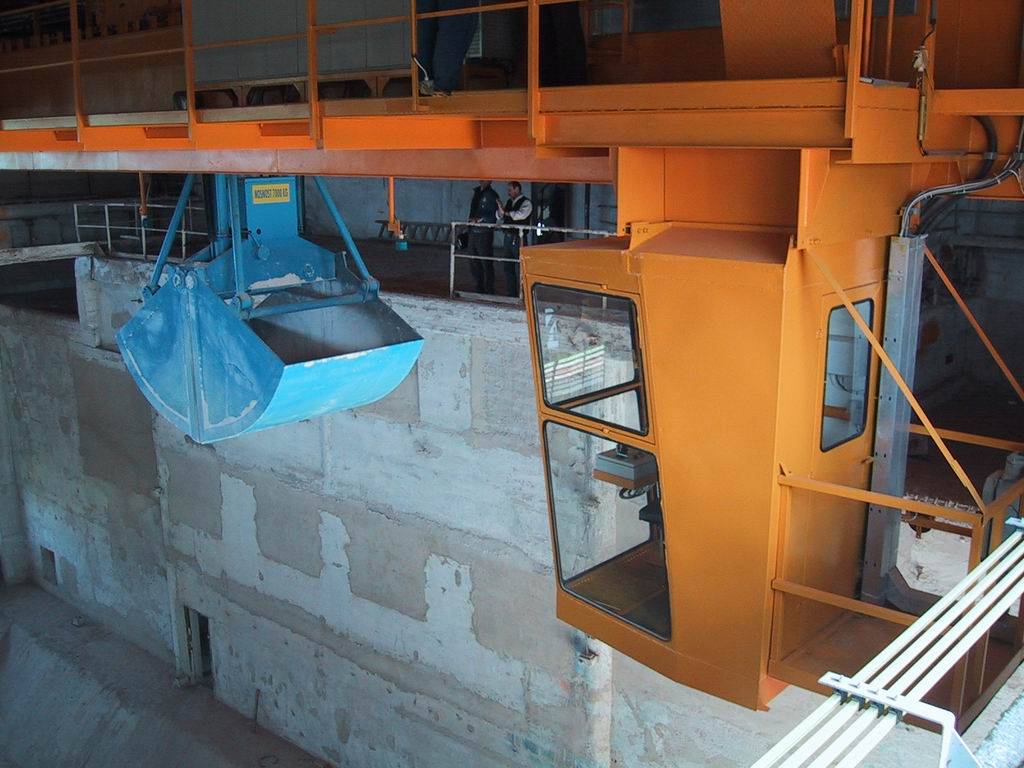
The load-bearing part consists of a steel structure, equipped with an access platform, an air-conditioned switchboard and a service cabin. The crane handles a 6.3 m³ electro-hydraulic bucket grab, which is powered and controlled via an integrated cable drum.
The control system processes signals from the speed and position sensors, gypsum level sensors, weighing device on the cat, and bridge and dredge position sensors. Data is transmitted to the control room via radio modem where it is visualised on the industrial computer displays. Here, the operator monitors the current status of the dump in the hall grid, the height of the material, the progress of cycles and the operating parameters of the equipment.
If required, it can be switched to manual mode - from the cab equipped with lever controls and safety features. This mode is designed for service interventions or non-standard handling outside the automatic program.
The entire system is designed in accordance with the requirements of occupational safety and industrial automation - including the prohibition of entry of persons into the hall area during automatic operation and the provision of all footbridges and access routes according to the instructions of the occupational safety inspection.